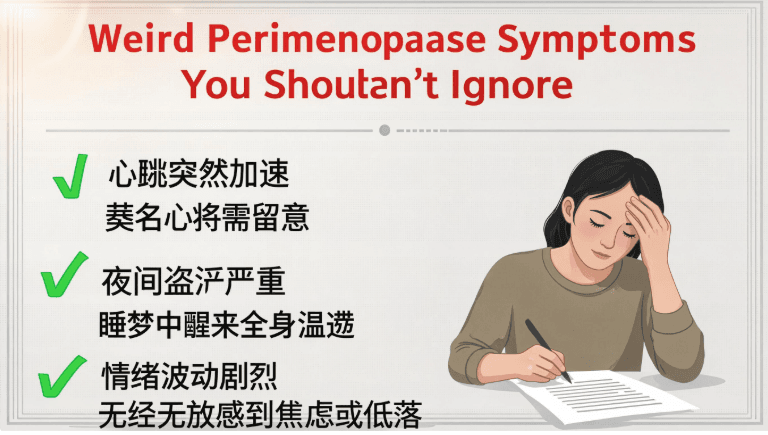

Hot flashes and irregular periods get most of the attention—but what about the strange symptoms nobody warns you about? If you’ve been dealing with unusual sensations, unexplained anxiety, random itching, or bizarre body changes, you may be experiencing weird perimenopause symptoms.
Many women enter perimenopause expecting only cycle changes and occasional night sweats. Instead, they’re blindsided by symptoms that seem completely unrelated to hormones. Because these symptoms can feel random or alarming, they’re often mistaken for serious illness, stress, or “just getting older.”
The truth is that hormonal fluctuations during perimenopause can affect nearly every body system, including the brain, nerves, skin, digestion, and cardiovascular system.
What Is Perimenopause?
Perimenopause is the transitional stage before menopause when ovarian hormone production becomes increasingly irregular.
During this time, estrogen and progesterone may rise and fall unpredictably, influencing multiple body functions.
Hormonal changes affect:
- Brain chemistry
- Temperature regulation
- Sleep patterns
- Nerve signaling
- Metabolism
- Emotional health
This broad hormonal impact helps explain why symptoms can feel so unusual.
Why Weird Symptoms Happen During Perimenopause
Hormones act like communication messengers.
When estrogen fluctuates, it affects systems far beyond reproduction.
This can disrupt:
- Circulation
- Digestion
- Neurotransmitters
- Skin hydration
- Stress response
That’s why weird perimenopause symptoms can feel unrelated yet still share the same hormonal root.
Weird Perimenopause Symptoms Many Women Experience
Itchy Skin
Many women notice unexplained itching without rash.
This happens because declining estrogen can reduce skin hydration and collagen.
Symptoms may include:
- Crawling sensations
- Dry patches
- Sudden itching
- Skin sensitivity
Electric Shock Sensations
Some women report sudden “zap” sensations.
These may feel like:
- Brief jolts
- Tingling shocks
- Nerve buzzing
Hormonal changes may affect nerve sensitivity. You may read this: First Symptoms of Perimenopause: Early Warning Signs.
Burning Mouth Syndrome
A burning or tingling sensation in the mouth can appear unexpectedly.
Common sensations include:
- Burning tongue
- Metallic taste
- Dry mouth
This symptom often surprises women.
Heart Palpitations
Sudden awareness of heartbeat can feel frightening.
Palpitations may feel like:
- Fluttering
- Racing
- Skipping beats
Hormones can affect cardiovascular signaling.
Tinnitus
Some women notice ringing in the ears during perimenopause.
This may sound like:
- Buzzing
- Ringing
- Humming
Strange Brain and Nervous System Symptoms
Hormonal fluctuations strongly affect the nervous system.
Brain Fog
One of the most common weird symptoms.
Women may experience:
- Forgetfulness
- Word loss
- Slow thinking
- Poor concentration
Dizziness
Sudden lightheadedness can occur.
Possible experiences:
- Spinning sensation
- Balance issues
- Motion sensitivity
Anxiety Out of Nowhere
Many women develop anxiety unexpectedly.
Symptoms may include:
- Racing thoughts
- Panic feelings
- Restlessness
Internal Trembling
Some describe feeling shaky inside without visible shaking.
This can feel unsettling.
Digestive Weird Perimenopause Symptoms
The digestive system also responds to hormones.
Bloating
Bloating may worsen even without dietary changes.
Nausea
Hormonal shifts can cause queasiness.
Acid Reflux
Some women develop reflux during perimenopause.
Digestive Sensitivity
Foods once tolerated may suddenly cause discomfort.
Sleep-Related Symptoms
Poor sleep can amplify strange sensations.
Symptoms include:
Night Sweats
Sudden sweating disrupts sleep.
Adrenaline Surges
Some women wake feeling panicked.
Vivid Dreams
Dream intensity may increase.
Sexual and Intimate Symptoms
Hormonal changes affect intimacy too.
Common symptoms include:
- Vaginal dryness
- Burning
- Low libido
- Reduced arousal
These symptoms are common but often under-discussed.
Emotional Symptoms That Feel Unusual
Not all weird symptoms are physical.
Emotional shifts may feel unfamiliar.
Rage
Sudden anger can feel intense.
Emotional Numbness
Some women feel detached.
Loss of Confidence
Self-perception may shift dramatically.
When Weird Symptoms Need Medical Attention
Not every symptom is hormonal.
Seek medical care for:
- Chest pain
- Fainting
- Severe palpitations
- Persistent vomiting
- Major weight loss
- Neurological changes
Medical evaluation helps rule out other conditions.
How to Manage Weird Symptoms
Symptoms often improve with targeted support.
Helpful strategies include:
Track Symptoms
Record timing and severity.
Improve Sleep
Better sleep reduces symptom intensity.
Reduce Stress
Stress worsens hormonal symptoms.
Helpful methods:
- Meditation
- Walking
- Breathwork
- Yoga
Seek Medical Support
Treatment options may include:
- Hormone therapy
- Symptom management
- Lifestyle support
FAQ
Are weird symptoms common in perimenopause?
Yes. Many women experience unusual symptoms beyond classic hot flashes.
Can hormones cause dizziness?
Yes. Hormonal fluctuations may affect circulation and balance.
Why do I feel electric shocks?
Some women report nerve-related sensations linked to hormonal changes.
Can perimenopause cause anxiety?
Yes. Anxiety is a common symptom.
Is itchy skin normal?
It can occur due to lower estrogen and drier skin.
Can symptoms come and go suddenly?
Yes. Hormonal fluctuations often make symptoms unpredictable.
When should I worry?
Seek medical help for severe, persistent, or alarming symptoms.
Do weird symptoms improve after menopause?
Many symptoms improve once hormones stabilize.
Conclusion
Experiencing weird perimenopause symptoms can feel confusing, frustrating, and even frightening—especially when nobody talks about them. Symptoms that seem unrelated, from itching to palpitations to brain fog, may actually share the same hormonal cause.
The most important takeaway is that unusual does not necessarily mean dangerous. Understanding these symptoms helps reduce fear, improve self-awareness, and make it easier to seek the right support during this transition.