
One month you notice familiar mid-cycle cramps and increased discharge. The next month, nothing happens at all. If that sounds confusing, you’re not alone. Understanding symptoms of ovulation during perimenopause can feel surprisingly difficult because the hormonal patterns that once felt predictable often become irregular.
Many women assume ovulation stops as soon as perimenopause begins, but that isn’t true. During perimenopause, ovulation may still occur—just less consistently. Some cycles release an egg normally, some ovulate late, and others may not ovulate at all.
That unpredictability is exactly why many women struggle to interpret cycle changes, fertility shifts, and physical symptoms during this stage.
What Is Perimenopause?
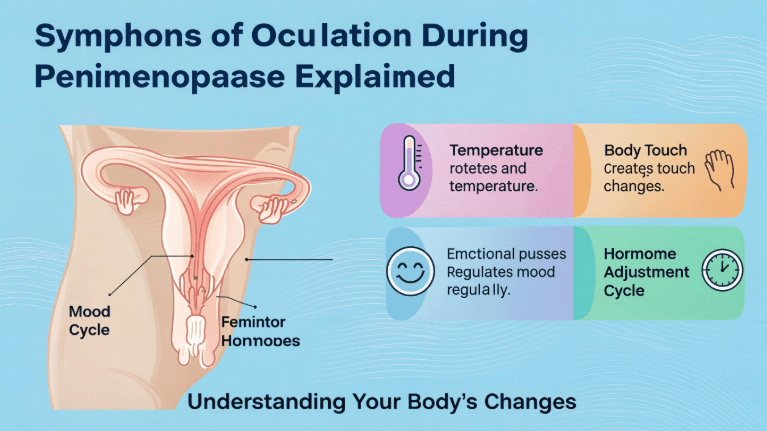
Perimenopause is the transition leading up to menopause, when ovarian function gradually declines. During this phase, estrogen, progesterone, and follicle-stimulating hormone (FSH) begin fluctuating.
These hormonal shifts affect:
- Ovulation timing
- Menstrual cycles
- Fertility
- Mood
- Body temperature
- Sleep quality
Perimenopause typically begins in the 40s, though earlier onset can happen.
Does Ovulation Still Happen During Perimenopause?
Yes—ovulation often continues during perimenopause, but not reliably.
In early perimenopause, many women still ovulate regularly. As ovarian reserve declines, cycles become increasingly inconsistent.
Possible cycle patterns include:
- Normal ovulation
- Delayed ovulation
- Early ovulation
- No ovulation (anovulatory cycles)
This explains why pregnancy remains possible until menopause is complete.
Why Ovulation Becomes Unpredictable
The ovaries become less responsive to hormonal signaling over time.
Important hormonal changes include:
Estrogen Fluctuations
Estrogen may spike or crash unexpectedly.
Rising FSH
The body produces more follicle-stimulating hormone to stimulate the ovaries.
Lower Progesterone
Skipped ovulation reduces progesterone production.
These changes affect cycle predictability.
Common Symptoms of Ovulation During Perimenopause
Recognizing symptoms of ovulation during perimenopause requires understanding that signs may feel stronger, weaker, or inconsistent compared with earlier years.
Ovulation Pain (Mittelschmerz)
Some women feel one-sided pelvic discomfort during ovulation.
Pain may feel:
- Sharp
- Cramp-like
- Brief
- Dull and aching
This discomfort may occur mid-cycle or at unpredictable times.
Cervical Mucus Changes
Ovulation often increases cervical mucus.
Typical fertile mucus appears:
- Clear
- Slippery
- Stretchy
- Egg-white-like
During perimenopause, mucus patterns may become less consistent. You may read this:Weird Perimenopause Symptoms You Shouldn’t Ignore.
Breast Tenderness
Hormonal changes around ovulation may cause:
- Breast soreness
- Sensitivity
- Swelling
Some women notice stronger tenderness during perimenopause.
Increased Libido
Hormonal surges around ovulation can increase sexual desire.
This may feel:
- Sudden
- Noticeable
- Short-lived
Not everyone experiences this symptom.
Mild Bloating
Ovulation-related fluid shifts may cause temporary bloating.
Increased Energy
Some women notice brief increases in:
- Motivation
- Focus
- Physical energy
Hormonal peaks may drive this change.
Spotting
Light spotting may occasionally occur during ovulation.
This is usually mild and short-lived.
Higher Basal Body Temperature
After ovulation, progesterone raises resting body temperature slightly.
Temperature tracking can sometimes help identify ovulation.
Unusual Ovulation Symptoms During Perimenopause
Hormonal instability can create unexpected symptoms.
Less common symptoms include:
- Headaches
- Nausea
- Mood swings
- Anxiety
- Fatigue
- Brain fog
Because hormone swings are larger, symptoms may feel more intense than before.
How to Tell If You Actually Ovulated
Because cycles become irregular, confirming ovulation can be tricky.
Helpful tools include:
Ovulation Predictor Kits
These detect luteinizing hormone surges.
However, perimenopause can cause false positives due to hormone fluctuations.
Basal Body Temperature Tracking
Daily temperature monitoring may show post-ovulation shifts.
Cycle Tracking Apps
Apps help identify recurring patterns.
Blood Testing
Hormone testing can sometimes clarify ovulatory status.
Fertility During Perimenopause
A common misconception is that pregnancy becomes impossible during perimenopause.
That is false.
If ovulation occurs, pregnancy remains possible.
Fertility declines because:
- Egg quantity decreases
- Egg quality declines
- Ovulation becomes inconsistent
But contraception may still be necessary.
When Ovulation Symptoms Need Medical Attention
Not all symptoms are normal.
Seek evaluation for:
- Severe pelvic pain
- Heavy bleeding
- Persistent spotting
- Sudden intense pain
- Large cycle changes
These symptoms may indicate other gynecologic conditions.
Managing Ovulation-Related Symptoms
Symptoms can often be managed with supportive strategies.
Pain Relief
Helpful options include:
- Heating pads
- Rest
- Hydration
Reduce Stress
Stress worsens hormonal symptoms.
Try:
- Meditation
- Walking
- Yoga
Track Cycles
Tracking improves symptom awareness.
Medical Support
Consult a healthcare provider if symptoms become disruptive.
FAQ
Do you still ovulate during perimenopause?
Yes, though ovulation becomes less predictable.
Can ovulation pain get worse during perimenopause?
Yes. Hormonal fluctuations may intensify symptoms.
Can you get pregnant during perimenopause?
Yes. Pregnancy remains possible until menopause is complete.
Why is my cervical mucus inconsistent?
Hormonal fluctuations can alter mucus production.
Do skipped periods mean no ovulation?
Often yes, but not always.
Are ovulation tests reliable during perimenopause?
They can help, but false positives are more common.
When does ovulation stop completely?
Ovulation stops once menopause is reached.
Is breast tenderness normal during ovulation?
Yes. Hormonal changes can cause temporary tenderness.
Conclusion
Tracking symptoms of ovulation during perimenopause can feel confusing because the body no longer follows the predictable hormonal rhythms of earlier years. Some months may feel familiar, while others seem completely different.
The key is understanding that irregular does not mean impossible. Ovulation may still happen, fertility can still exist, and symptoms can still offer valuable clues about what your body is doing during this transition.