
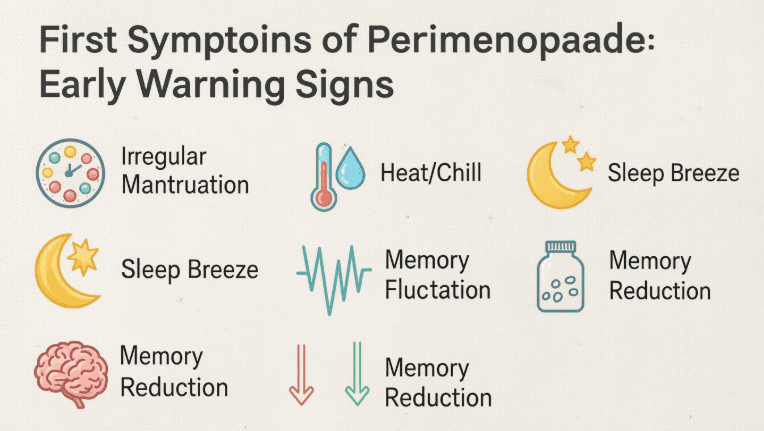

For many women, perimenopause doesn’t begin with a dramatic announcement—it starts with subtle shifts that are easy to dismiss. A period arrives earlier than usual. Sleep suddenly becomes difficult. Small frustrations feel unusually overwhelming. These changes can feel random until the pattern becomes impossible to ignore.
The first symptoms of perimenopause often appear years before menopause itself. Because the early signs are frequently mild, many women mistake them for stress, burnout, aging, or lifestyle changes rather than hormonal transition.
Understanding these early warning signs can help you recognize what your body is telling you, seek support sooner, and navigate midlife changes with more confidence.
What Is Perimenopause?
Perimenopause is the transitional stage before menopause when ovarian hormone production gradually becomes less predictable. During this phase, estrogen and progesterone fluctuate rather than decline steadily.
These hormonal changes affect multiple body systems, including:
- Reproductive health
- Brain chemistry
- Sleep regulation
- Temperature control
- Metabolism
- Emotional balance
Perimenopause usually begins in the 40s, though some women notice symptoms in their late 30s.
Why Early Symptoms Are Easy to Miss
The beginning of perimenopause often feels subtle.
Instead of dramatic hot flashes, many women first notice small but persistent changes.
This happens because hormones may still cycle monthly—but less predictably.
That unpredictability explains why first symptoms of perimenopause may come and go for months or years before becoming obvious. You may read this: Press Ganey Login: Access Guide, Portal Help & Troubleshooting.
First Symptoms of Perimenopause
Irregular Periods
Changes in menstrual cycles are often the earliest sign.
You may notice:
- Shorter cycles
- Longer cycles
- Heavier bleeding
- Lighter bleeding
- Missed periods
Even small timing shifts can signal hormonal changes.
Worsening PMS
Many women experience stronger premenstrual symptoms.
Common changes include:
- More irritability
- Stronger cramps
- Increased breast tenderness
- Greater fatigue
Hormonal swings can amplify symptoms you previously managed well.
Sleep Problems
Sleep issues frequently appear early.
Symptoms may include:
- Difficulty falling asleep
- Frequent waking
- Early waking
- Restless sleep
Even mild sleep disruption can affect daily wellbeing.
Mood Swings
Emotional changes are among the earliest non-physical signs.
You may feel:
- Irritable
- Overwhelmed
- Easily frustrated
- More sensitive
Mood changes can feel confusing when no obvious cause exists.
Anxiety
Unexpected anxiety is surprisingly common.
Some women experience:
- Racing thoughts
- Restlessness
- Increased worry
- Panic sensations
Hormonal fluctuations affect neurotransmitters that regulate stress response.
Brain Fog
Cognitive symptoms often appear early.
Common experiences include:
- Forgetfulness
- Trouble focusing
- Word-finding issues
- Mental fatigue
Many women describe feeling less mentally sharp.
Fatigue
Persistent fatigue can become noticeable.
Even adequate sleep may not fully restore energy.
Low Libido
Changes in sexual desire can occur early.
Contributing factors include:
- Hormonal shifts
- Fatigue
- Stress
- Sleep problems
Hot Flashes
Although often associated with later stages, mild hot flashes can appear early.
These may feel like:
- Sudden warmth
- Facial flushing
- Brief sweating
Less Obvious Early Symptoms
Some symptoms feel unexpected.
Less-discussed early signs include:
- Joint stiffness
- Heart palpitations
- Headaches
- Dry skin
- Breast tenderness
- Bloating
These symptoms may seem unrelated but can reflect hormonal shifts.
How Long Early Symptoms Last
The timeline varies widely.
Some women experience mild early symptoms for years.
Typical progression includes:
Early Stage
Subtle cycle changes and mild symptoms.
Mid Stage
Hormonal swings intensify.
Late Stage
Symptoms become more obvious and periods grow increasingly irregular.
There is no universal timeline.
When to See a Doctor
Seek medical evaluation if symptoms cause:
- Heavy bleeding
- Severe insomnia
- Depression
- Major fatigue
- Significant quality-of-life disruption
Doctors may also rule out other conditions such as:
- Thyroid disorders
- Iron deficiency
- Anxiety disorders
- Sleep disorders
Managing Early Perimenopause Symptoms
Symptoms often improve with targeted lifestyle support.
Improve Sleep
Helpful habits include:
- Consistent bedtime
- Cool room temperature
- Reduced screen time
Exercise Regularly
Movement supports mood and metabolism.
Good options include:
- Walking
- Strength training
- Yoga
Reduce Stress
Stress intensifies hormonal symptoms.
Try:
- Meditation
- Breathwork
- Journaling
- Therapy
Prioritize Nutrition
Focus on:
- Protein
- Fiber
- Healthy fats
- Calcium-rich foods
FAQ
What is usually the first symptom of perimenopause?
Irregular periods are often the earliest symptom, though sleep or mood changes may appear first.
Can perimenopause start at 35?
Yes. Some women begin earlier than average.
Are hot flashes always the first symptom?
No. Many women experience cycle changes or mood symptoms first.
Can anxiety be an early sign?
Yes. Anxiety is a common early symptom.
How long does perimenopause last?
It often lasts several years, though timelines vary.
Can symptoms come and go?
Yes. Hormonal fluctuations make symptoms unpredictable.
Can blood tests confirm early perimenopause?
Hormone tests may help but are not always definitive.
Should I seek treatment early?
Yes, especially if symptoms affect daily life.
Conclusion
Recognizing the first symptoms of perimenopause can make this hormonal transition far less confusing. What initially feels like random physical or emotional changes often reflects shifting hormone patterns that begin long before menopause officially arrives.
The earlier you recognize these signals, the easier it becomes to adapt, seek support, and care for your health with intention. Awareness turns uncertainty into understanding—and that can make all the difference.