
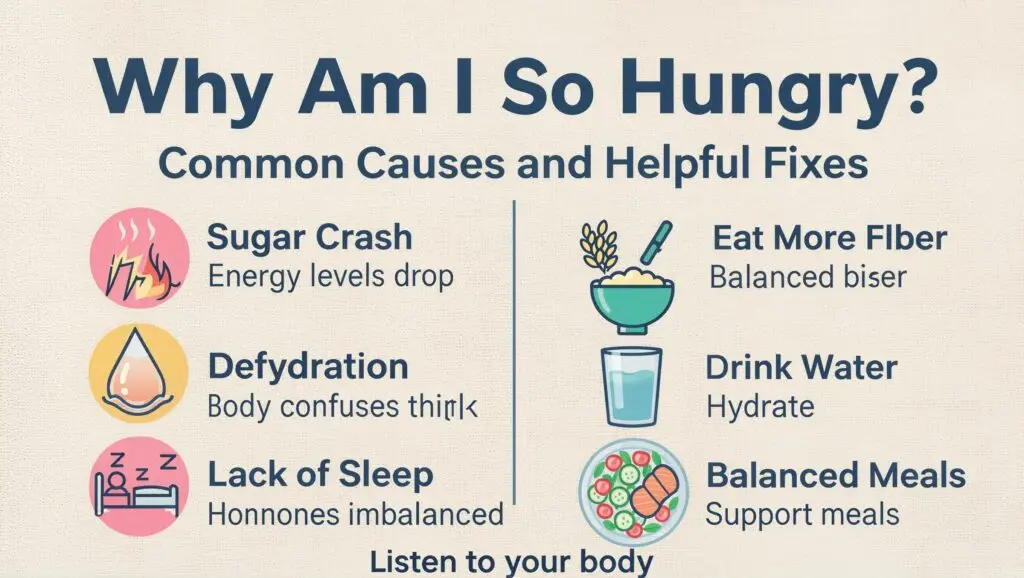

You eat a full meal, yet an hour later your stomach is growling again. Or maybe you find yourself constantly thinking about snacks, cravings, and food even when you know you’ve eaten enough. If you’ve ever asked yourself, why am i so hungry, you’re definitely not alone.
Hunger is far more complicated than simply “not eating enough.” Your appetite is influenced by hormones, sleep, stress, emotions, blood sugar levels, activity, medications, and even dehydration. Sometimes constant hunger is completely normal, while other times it may signal that your body is trying to tell you something important.
Many people feel frustrated or guilty about frequent hunger, especially when trying to lose weight or eat healthier. But understanding what drives appetite can help you make sense of your cravings instead of fighting against them blindly.
This guide explains the most common reasons people feel unusually hungry, how hunger hormones work, when increased appetite may indicate a health concern, and practical ways to feel more satisfied throughout the day.
How Hunger Actually Works
Hunger Is Controlled by Hormones
Appetite is regulated by a complex communication system involving the brain, digestive system, and hormones.
Key hunger-related hormones include:
- Ghrelin (the hunger hormone)
- Leptin (the fullness hormone)
- Insulin
- Cortisol
These hormones constantly respond to sleep, food intake, stress, and energy needs.
Hunger Isn’t Always About Calories
Sometimes the body craves food because it lacks nutrients, sleep, hydration, or emotional balance rather than because it truly needs more calories.
Understanding this difference can help reduce confusion around constant hunger.

Why Am I So Hungry Even After Eating?
Meals May Lack Protein
Protein helps increase fullness and stabilize blood sugar.
Meals low in protein may leave people feeling hungry quickly afterward.
Good protein sources include:
- Eggs
- Chicken
- Greek yogurt
- Fish
- Beans
- Tofu
- Cottage cheese
Adding protein to every meal often improves satisfaction significantly.
Low Fiber Intake
Fiber slows digestion and supports fullness.
Low-fiber meals digest quickly, which may lead to:
- Hunger shortly after eating
- Blood sugar crashes
- Cravings
Fiber-rich foods include:
- Vegetables
- Fruits
- Oats
- Beans
- Whole grains
- Chia seeds
Blood Sugar Swings and Hunger
Refined Carbohydrates Digest Quickly
Sugary foods and refined carbs may cause rapid blood sugar spikes followed by crashes.
This cycle can increase:
- Hunger
- Fatigue
- Cravings
- Irritability
Foods That Help Stabilize Appetite
Balanced meals containing:
- Protein
- Fiber
- Healthy fats
- Complex carbohydrates
often support steadier energy and appetite control.

Sleep Deprivation and Increased Appetite
Poor Sleep Raises Hunger Hormones
One of the most overlooked answers to why am i so hungry is sleep deprivation.
Lack of sleep may:
- Increase ghrelin
- Lower leptin
- Intensify cravings
- Increase emotional eating
Why Cravings Get Stronger
Sleep deprivation often increases cravings for:
- Sugar
- Processed foods
- High-calorie snacks
The brain seeks quick energy when exhausted.
Stress and Emotional Hunger
Cortisol Affects Appetite
Stress raises cortisol levels, which may increase appetite and cravings.
Many people notice stronger hunger during:
- Anxiety
- Emotional overwhelm
- Busy work periods
- Relationship stress
Emotional Eating Feels Different
Emotional hunger often appears suddenly and craves comfort foods specifically.
Common emotional cravings include:
- Chips
- Ice cream
- Chocolate
- Fast food
Physical hunger usually develops more gradually.
Dehydration Can Mimic Hunger
Thirst Signals Are Easily Confused
The body sometimes mistakes dehydration for hunger.
Symptoms of dehydration may include:
- Fatigue
- Headaches
- Dry mouth
- Low energy
- Cravings
Simple Hydration Habits
Drinking water consistently throughout the day may help reduce unnecessary snacking.
Many people notice improved appetite control after increasing hydration.

Why Am I So Hungry During Weight Loss?
Calorie Deficits Increase Appetite
When eating fewer calories, the body naturally increases hunger hormones to protect energy stores.
This is a normal biological response.
Restrictive Dieting Can Backfire
Extremely restrictive diets may lead to:
- Intense cravings
- Binge eating
- Obsessive food thoughts
- Fatigue
Sustainable nutrition usually works better than severe restriction.
Exercise and Increased Hunger
Physical Activity Raises Energy Needs
Exercise burns calories, which naturally increases hunger for some people.
This is especially common after:
- Intense cardio
- Long workouts
- Heavy strength training
Not All Hunger Is Bad
Increased appetite after exercise can simply reflect legitimate energy needs.
The goal is balanced fueling rather than ignoring hunger entirely.
Hormones and Appetite Changes
Menstrual Cycles Affect Hunger
Many women notice stronger appetite during certain phases of the menstrual cycle.
Hormonal shifts may increase cravings for:
- Carbohydrates
- Sugar
- Comfort foods
Perimenopause and Menopause
Hormonal changes during midlife may also influence:
- Appetite
- Cravings
- Emotional eating
- Weight changes
Hormones strongly affect metabolism and fullness signals.
Why Am I So Hungry All the Time and Tired?
Iron Deficiency
Low iron levels may contribute to:
- Fatigue
- Weakness
- Increased appetite
- Brain fog
Blood Sugar Problems
Blood sugar instability can cause cycles of:
- Hunger
- Energy crashes
- Irritability
- Cravings
Thyroid Issues
An overactive thyroid may increase metabolism and appetite significantly.
Persistent extreme hunger should not be ignored.
Medications That Increase Appetite
Certain Medications Affect Hunger
Some medications may increase appetite as a side effect, including:
- Steroids
- Antidepressants
- Antihistamines
- Certain diabetes medications
Appetite Changes Vary
Medication-related hunger differs from person to person.
Healthcare providers can help evaluate possible causes.
Processed Foods and Constant Hunger
Highly Processed Foods Digest Quickly
Ultra-processed foods often lack the protein and fiber needed for lasting fullness.
Examples include:
- Chips
- Sugary cereals
- Candy
- White bread
- Fast food
Hyperpalatable Foods Increase Cravings
Processed foods are designed to encourage overeating by stimulating reward pathways in the brain.
This can make appetite regulation more difficult.
Gut Health and Hunger Signals
Gut Bacteria Influence Appetite
The gut microbiome plays an important role in digestion and hunger regulation.
Poor gut health may contribute to:
- Bloating
- Cravings
- Irregular appetite
- Digestive discomfort
Supporting Gut Health
Helpful habits include:
- Eating fiber-rich foods
- Including fermented foods
- Staying hydrated
- Managing stress
Gut health affects far more than digestion alone.
Why Am I So Hungry at Night?
Undereating Earlier in the Day
Many people unintentionally eat too little during the daytime, leading to intense nighttime hunger.
Sleep and Emotional Eating Patterns
Evening cravings may increase due to:
- Stress
- Fatigue
- Boredom
- Habitual snacking
Balanced meals earlier in the day often reduce nighttime overeating.
Protein and Fullness
Protein Helps Control Hunger Hormones
Protein is one of the most filling nutrients.
It may help reduce:
- Snacking
- Cravings
- Frequent hunger
Easy Ways to Increase Protein
Try adding:
- Eggs at breakfast
- Greek yogurt snacks
- Lean protein at lunch
- Protein-rich dinners
Small changes can improve fullness significantly.
Healthy Fats and Satiety
Fat Helps Slow Digestion
Healthy fats help meals feel more satisfying.
Nutritious fat sources include:
- Avocados
- Nuts
- Seeds
- Olive oil
- Fatty fish
Low-Fat Diets May Increase Hunger
Extremely low-fat diets sometimes leave people feeling constantly unsatisfied.
Balance matters more than eliminating entire food groups. You may also read this: Geode Health Rockford Il.
Emotional Factors Behind Constant Hunger
Food and Comfort Are Connected
Food is emotional for many people.
Stress, loneliness, sadness, and boredom may all influence appetite.
Mindful Eating Helps
Helpful habits include:
- Slowing down while eating
- Avoiding distractions
- Recognizing emotional triggers
- Checking hunger levels before snacking
Awareness improves appetite regulation over time.
Medical Conditions Linked to Excessive Hunger
Diabetes
Uncontrolled blood sugar may increase hunger significantly.
Hyperthyroidism
An overactive thyroid can speed metabolism and increase appetite.
Polycystic Ovary Syndrome
PCOS may contribute to insulin resistance and increased cravings.
Mental Health Conditions
Anxiety, depression, and chronic stress may also influence eating behaviors.
Persistent excessive hunger deserves medical evaluation when symptoms feel unusual.
Ways to Feel Full Longer
Build Balanced Meals
Balanced meals often include:
- Protein
- Fiber
- Healthy fats
- Complex carbohydrates
Prioritize Sleep
Better sleep helps regulate hunger hormones naturally.
Stay Hydrated
Hydration supports energy and appetite control.
Reduce Extreme Dieting
Restrictive eating patterns often intensify cravings and overeating later.
When to Seek Medical Advice
Warning Signs to Watch For
Consult a healthcare provider if excessive hunger occurs alongside:
- Unexplained weight loss
- Extreme fatigue
- Excessive thirst
- Frequent urination
- Dizziness
- Persistent symptoms
Personalized Evaluation Matters
Appetite changes sometimes reflect underlying health conditions that require professional care.
FAQs
Why am i so hungry all the time?
Constant hunger may be linked to poor sleep, stress, low protein intake, dehydration, blood sugar instability, hormonal changes, or medical conditions.
Can dehydration make you feel hungry?
Yes. The body sometimes confuses thirst signals with hunger.
Does sleep affect appetite?
Absolutely. Poor sleep increases hunger hormones and cravings.
Why do I crave sugar when stressed?
Stress raises cortisol, which may increase cravings for high-calorie comfort foods.
Can low protein intake increase hunger?
Yes. Protein helps support fullness and stabilize appetite.
Is it normal to feel hungry during weight loss?
Some increased hunger is normal during calorie restriction, especially with aggressive dieting.
Why am I hungry after eating fast food?
Fast food is often low in fiber and protein while high in refined carbohydrates, which may not provide lasting fullness.
Can hormones affect appetite?
Yes. Menstrual cycles, menopause, thyroid hormones, and insulin all influence hunger signals.
When should I worry about excessive hunger?
Persistent hunger combined with fatigue, weight changes, or unusual symptoms should be evaluated medically.
How can I feel full longer naturally?
Balanced meals, hydration, sleep, stress management, protein, fiber, and healthy fats all help support fullness.
Conclusion
Hunger is far more complex than simple willpower or calorie counting. If you constantly find yourself asking why am i so hungry, your body may be responding to stress, poor sleep, blood sugar swings, hormonal shifts, dehydration, nutritional imbalance, or emotional triggers.
Rather than fighting hunger aggressively, understanding its root causes often leads to healthier and more sustainable solutions. Balanced meals, adequate protein, hydration, stress management, sleep, and mindful eating habits can make a major difference in how satisfied and energized you feel throughout the day.
Most importantly, persistent or extreme hunger should never be ignored. Your appetite is one of the body’s most important communication systems, and listening to it carefully can provide valuable insight into your overall health and well-being.