
Have you felt like your body suddenly has a mind of its own—your sleep is worse, your moods are unpredictable, and your period seems to follow no rules? These may be symptoms and signs of perimenopause, a transitional phase that many women experience years before menopause officially begins.
For many women, perimenopause arrives quietly. What starts as occasional night sweats or unexplained anxiety can gradually become a pattern that affects daily life. Understanding what’s happening inside your body can help you feel more in control and less confused.
Perimenopause isn’t a disease. It’s a natural biological transition, but that doesn’t mean the symptoms are easy. The more informed you are, the better prepared you’ll be to manage the changes.
What Is Perimenopause?
Perimenopause is the stage leading up to menopause, when the ovaries gradually produce less estrogen and progesterone. Menopause itself is confirmed after 12 consecutive months without a menstrual period.
This transition can begin in a woman’s late 30s or 40s and may last anywhere from a few years to over a decade.
Hormonal fluctuations during this phase can cause physical, emotional, and cognitive changes that vary from person to person.
How Perimenopause Differs from Menopause
- Perimenopause: Hormones fluctuate, periods still occur
- Menopause: Periods have stopped for 12 months
- Postmenopause: Years following menopause
Common Symptoms and Signs of Perimenopause
Recognizing symptoms and signs of perimenopause early can help reduce anxiety and improve treatment options.
Irregular Periods
One of the earliest signs is a change in menstrual cycles.
Your period may become:
- Shorter or longer
- Heavier or lighter
- More frequent or delayed
- Completely skipped some months
Irregular bleeding happens because ovulation becomes inconsistent.
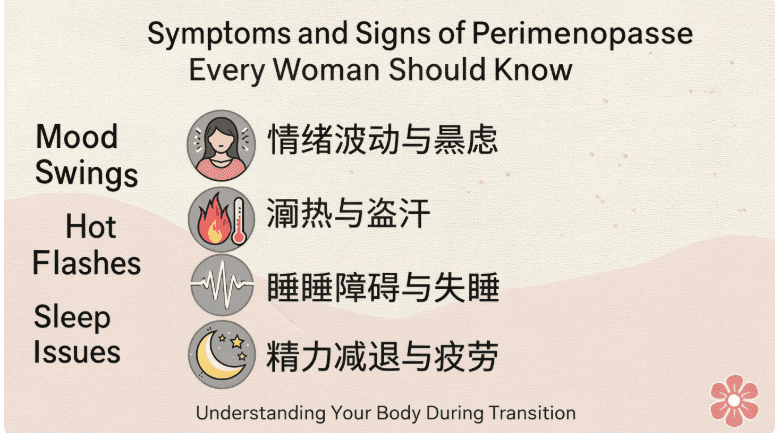
Hot Flashes
Hot flashes are sudden waves of heat that spread across the face, chest, and body.
They may last from seconds to several minutes and often include:
- Sweating
- Flushing
- Rapid heartbeat
- Chills afterward
Night Sweats
Night sweats are hot flashes that happen during sleep.
These episodes can leave clothes or sheets soaked and often disrupt sleep patterns, contributing to fatigue. You may read this: Low Estrogen Face: Signs, Causes, and Treatment Options.
Sleep Disturbances
Many women struggle with sleep during perimenopause.
Common problems include:
- Trouble falling asleep
- Waking frequently
- Early morning waking
- Poor sleep quality
Hormonal shifts, stress, and night sweats often work together.
Mood Swings
Hormones influence brain chemistry, so emotional changes are common.
You may notice:
- Irritability
- Increased frustration
- Emotional sensitivity
- Unexpected crying
Mood swings can feel intense even without obvious triggers.
Emotional and Mental Symptoms
The emotional symptoms and signs of perimenopause are often overlooked.
Anxiety
Some women experience anxiety for the first time during perimenopause.
Symptoms include:
- Racing thoughts
- Constant worry
- Panic sensations
- Restlessness
Lower estrogen may affect serotonin and stress regulation.
Depression
Hormonal fluctuations can worsen depression or trigger depressive symptoms.
Watch for:
- Persistent sadness
- Loss of motivation
- Low energy
- Feelings of hopelessness
Seek professional help if symptoms persist.
Brain Fog
Brain fog can feel frustrating and confusing.
Common signs include:
- Forgetfulness
- Poor concentration
- Difficulty finding words
- Mental fatigue
Many women describe this as feeling mentally “slower.”
Physical Symptoms Beyond Hot Flashes
Perimenopause affects more than periods and temperature regulation.
Fatigue
Many women report overwhelming tiredness even after rest.
Possible causes include:
- Hormonal fluctuations
- Poor sleep
- Stress
- Nutritional deficiencies
Weight Gain
Weight gain during midlife is common, especially around the abdomen.
Hormonal shifts may cause:
- Slower metabolism
- Increased fat storage
- Reduced muscle mass
Breast Tenderness
Breast soreness may come and go as estrogen levels fluctuate.
Some women notice more tenderness than during PMS.
Joint Pain
Declining estrogen may affect joint lubrication and inflammation.
Common areas include:
- Knees
- Hands
- Hips
- Shoulders
Sexual and Reproductive Changes
Vaginal Dryness
Lower estrogen can thin vaginal tissues and reduce natural lubrication.
This may cause:
- Dryness
- Burning
- Irritation
- Discomfort during intimacy
Lower Libido
A reduced sex drive is common.
Contributing factors include:
- Hormonal changes
- Stress
- Fatigue
- Body image concerns
Frequent Urination
Some women feel they need to urinate more often.
Hormonal changes can weaken pelvic tissues and affect bladder control.
Skin, Hair, and Body Changes
The symptoms and signs of perimenopause often show up externally too.
Dry Skin
Estrogen helps maintain skin hydration and elasticity.
Lower estrogen may cause:
- Dryness
- Itching
- Increased sensitivity
Hair Thinning
Hair may lose volume or shed more than usual.
Some women also notice facial hair growth due to hormonal imbalance.
Changes in Body Odor
Sweat gland changes and hot flashes can alter body odor patterns.
This is surprisingly common but rarely discussed.
Less Common Symptoms
Not all perimenopause symptoms are widely known.
Some women experience:
- Heart palpitations
- Dizziness
- Headaches
- Tingling sensations
- Ringing in ears
- Digestive changes
- Increased allergies
These can still be linked to hormone fluctuations.
Why Symptoms Vary So Much
Not every woman experiences the same transition.
Factors affecting severity include:
Genetics
Family history often influences symptom intensity.
Lifestyle
Diet, exercise, sleep, and stress levels matter significantly.
Medical History
Conditions like thyroid disorders or PCOS may affect symptoms.
When to See a Doctor
You should consult a healthcare professional if symptoms interfere with daily life.
Seek help for:
- Extremely heavy bleeding
- Severe depression
- Persistent insomnia
- Frequent palpitations
- Sudden major weight changes
Medical evaluation can rule out other conditions such as thyroid disorders or anemia.
How to Manage Symptoms
Understanding symptoms and signs of perimenopause is only part of the solution—management matters too.
Improve Nutrition
Focus on:
- Protein
- Calcium
- Vitamin D
- Omega-3 fats
- Fiber
Balanced meals support hormones and metabolism.
Exercise Regularly
Exercise helps with:
- Mood
- Weight management
- Sleep
- Bone strength
Aim for strength training plus cardio.
Reduce Stress
Helpful practices include:
- Meditation
- Walking
- Journaling
- Breathing exercises
Stress reduction often improves symptoms significantly.
Consider Medical Treatments
Treatment options may include:
- Hormone therapy
- Birth control pills
- Antidepressants
- Vaginal estrogen
Always discuss risks and benefits with a doctor.
FAQ
What age does perimenopause usually start?
Most women begin perimenopause in their 40s, though some notice symptoms in their late 30s.
How long does perimenopause last?
It can last between 4 and 10 years, depending on hormonal patterns and genetics.
Can perimenopause cause anxiety?
Yes. Anxiety is one of the common symptoms caused by fluctuating estrogen levels.
Do all women get hot flashes?
No. Many women experience them, but not everyone does.
Can you get pregnant during perimenopause?
Yes. Pregnancy is still possible until menopause is complete.
Is weight gain inevitable?
Not necessarily. Healthy lifestyle habits can reduce the risk of significant weight gain.
Can perimenopause affect memory?
Yes. Brain fog and forgetfulness are commonly reported.
Are symptoms treatable?
Yes. Lifestyle changes, therapy, and medical treatments can greatly improve quality of life.
Conclusion
The symptoms and signs of perimenopause can feel overwhelming, especially when they appear gradually and unpredictably. But knowing what to expect can make a huge difference. Whether you’re dealing with mood swings, sleep disruption, hot flashes, or brain fog, remember that these changes are part of a normal hormonal transition.
Most importantly, you don’t have to navigate this phase alone. With the right knowledge, lifestyle support, and medical guidance when needed, perimenopause can become a manageable chapter rather than a confusing one.