
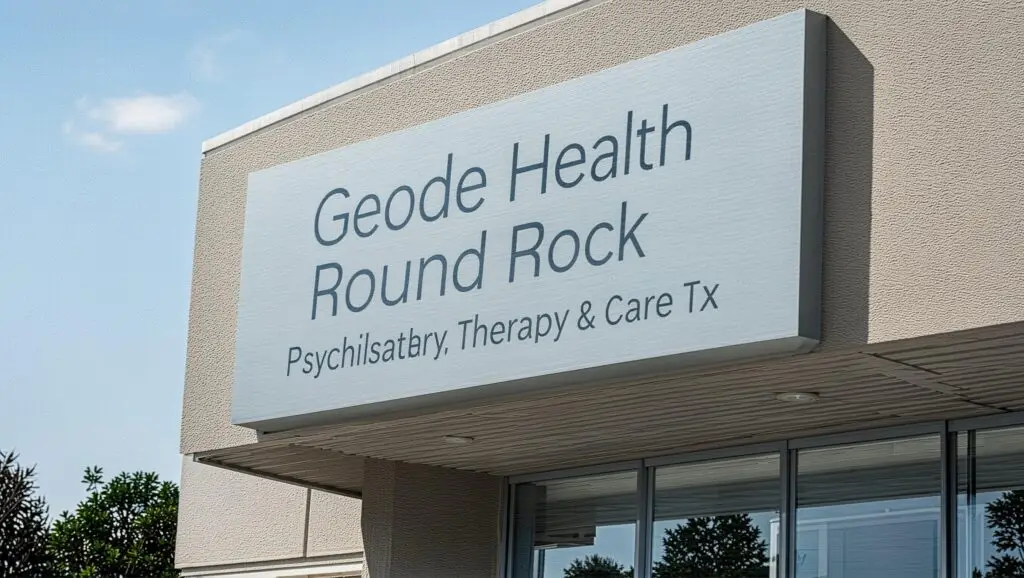

Finding mental health support should not feel like a second problem on top of the one you are already carrying. If you are searching for Geode Health Round Rock, you probably want honest, useful information about the office, available services, insurance questions, appointment options, and what it may feel like to start care.
That matters because mental health care is rarely something people search for casually. Someone may be waking up with anxiety, losing motivation from depression, struggling with ADHD symptoms, trying to manage medication, processing trauma, or looking for help after months of quietly saying, “I’m fine.”
[Image 1: A calm outpatient mental health clinic waiting room in Round Rock, Texas, with soft seating, natural light, and a welcoming front desk]
Geode Health Round Rock is listed as part of Geode’s Texas care network in partnership with Baylor Scott & White Health. The Round Rock office offers in-person and online mental health care options, including psychiatry, therapy, ADHD testing, depression treatment, anxiety support, trauma therapy, psychotherapy, and TMS services depending on provider availability and clinical need.
This guide walks through the Round Rock location, services, care model, insurance questions, first-visit preparation, provider fit, and practical tips so you can make a clearer decision before booking.
Table of Contents
- What Is Geode Health Round Rock?
- Geode Health Round Rock Location and Office Details
- Background, Growth, and Financial Context
- Mental Health Services Available in Round Rock
- Why Round Rock Residents May Need Flexible Mental Health Care
- In-Person and Online Visits at Geode Health Round Rock
- Insurance, Cost, and Appointment Questions
- What to Expect at Your First Appointment
- Real-Life Examples of Patients Seeking Care
- How to Choose the Right Mental Health Provider
- FAQs
- Conclusion
What Is Geode Health Round Rock?
Geode Health Round Rock is an outpatient mental health care location in Round Rock, Texas, offering scheduled behavioral health services for people seeking help with emotional, psychiatric, and psychological concerns. It is not an emergency room, inpatient hospital, or crisis center. Instead, it is designed for appointments with mental health professionals who may support patients through psychiatry, therapy, medication management, ADHD testing, anxiety treatment, depression care, trauma therapy, TMS, and related services.
In everyday language, it is a place where someone can start getting professional mental health support without having to know every clinical term before reaching out. You may not know whether you need therapy, psychiatry, medication, testing, or a combination of care. You may only know that something feels off and life has become harder than it should be.
A clear definition
Geode Health Round Rock is a local outpatient mental health office in Round Rock, TX, where patients may access psychiatry, therapy, medication support, ADHD testing, TMS therapy, and online mental health visits through Geode’s care network and Texas partnership with Baylor Scott & White Health.
That definition is helpful because mental health care can feel confusing at first. Psychiatry, therapy, psychotherapy, medication management, psychological evaluation, and TMS are related, but they are not the same. The right starting point depends on your symptoms, goals, health history, insurance, provider availability, and comfort level. You may know this: Best Creatine for Women for Strength and Energy Support.
Who may consider Geode Health Round Rock?
People may consider this location if they are searching for:
- Psychiatry in Round Rock, TX
- Therapy or counseling near Round Rock
- Medication management
- ADHD testing in Round Rock
- TMS therapy in Round Rock
- Anxiety treatment
- Depression treatment
- Trauma therapy
- Psychotherapy
- Virtual psychiatry or online therapy
- Outpatient mental health care
- A mental health clinic connected to Baylor Scott & White
- Support for stress, grief, burnout, focus problems, or mood concerns
The office may be especially relevant for residents of Round Rock, Cedar Park, Pflugerville, Georgetown, Hutto, Leander, Wells Branch, Brushy Creek, North Austin, and nearby Williamson County communities.
Why outpatient care matters
Outpatient mental health care helps people receive support while continuing their daily lives. A person can attend appointments while still working, going to school, parenting, caregiving, managing responsibilities, and staying connected to normal routines.
That matters because many mental health struggles are serious without requiring hospitalization. Anxiety that ruins sleep, depression that drains motivation, ADHD symptoms that disrupt work, or trauma symptoms that affect relationships all deserve care.
Geode Health Round Rock Location and Office Details
The official Geode location directory lists the Round Rock office under Geode + Baylor Scott & White. The official Round Rock pages list the office address, phone number, hours, and in-office or online appointment options. Before visiting, patients should confirm appointment details directly because schedules, provider availability, and services can change.
Office details
| Detail | Information |
|---|---|
| Location name | Geode Health Round Rock |
| Address | 7200 Wyoming Springs Dr suite 1600, Round Rock, TX 78681 |
| Phone | (512) 588-1439 |
| Office hours | Monday–Friday, 8am–5pm |
| Weekend hours | Saturday–Sunday closed |
| Appointment style | In-person and online visits |
| Partnership | Geode + Baylor Scott & White Health |
| Walk-ins | Book ahead; Baylor Scott & White directory lists Round Rock as not accepting walk-ins |
| The office may be convenient for people near Wyoming Springs Drive, FM 620, Brushy Creek, Cedar Park, Avery Ranch, Fern Bluff, Cat Hollow, and parts of North Austin. However, Central Texas traffic can still be unpredictable, so it is smart to plan extra time for a first visit. |
Why the address matters
A mental health office address may seem like a simple detail, but it can affect whether someone actually follows through. When a person is anxious, depressed, overwhelmed, distracted, or dealing with panic symptoms, uncertainty about where to park, which suite to enter, or whether the appointment is online can become enough friction to cancel.
Before your first visit, confirm:
- Full street address
- Suite number
- Parking instructions
- Building entrance
- Check-in process
- Whether your visit is in person or virtual
- What time to arrive
- Whom to call if you are running late
- Whether any paperwork must be completed before arrival
These details are practical, but they also reduce emotional pressure. The less stressful the appointment feels, the more likely you are to show up.
Nearby communities served
People may search for Geode Health Round Rock even if they do not live directly in Round Rock. Nearby communities that may find the office convenient include:
- Cedar Park
- Georgetown
- Pflugerville
- Hutto
- Leander
- Brushy Creek
- Wells Branch
- North Austin
- Jollyville
- Liberty Hill
- Taylor
- Austin suburbs near Williamson County
For some patients, the Round Rock office may be easier than driving into central Austin. For others, virtual appointments may make exact distance less important.
Background, Growth, and Financial Context
Geode Health is a privately held outpatient mental health provider that has expanded across multiple states and cities. In Texas, Geode is connected to a partnership with Baylor Scott & White Health that aims to expand access to outpatient behavioral health care.
Because Geode is privately held, it does not publish a public “net worth” figure like a publicly traded company would report market capitalization. For patients, that number would not be the most useful measure anyway. What matters more is whether care is available, affordable, clinically appropriate, and consistent.
Personal background and company journey
Since this article is about a healthcare organization rather than an individual, the personal background section is best understood as the company’s origin story and growth journey. Geode Health opened its first offices in 2022 and grew into a multi-state outpatient mental health provider.
That growth reflects a real problem many people recognize immediately. Mental health care can be hard to find. Some patients call several offices and never hear back. Others find therapy but cannot find a psychiatric provider. Some discover that the first available appointment is weeks away. Others book care only to learn later that their insurance is not accepted.
Geode’s model attempts to reduce those barriers by offering mental health services through a coordinated network that includes in-person and virtual options.
Achievements and access goals
The meaningful achievement is not simply having offices on a map. It is whether those offices help people reach care sooner, with less confusion and more support.
For a patient in Round Rock, that may mean:
- Finding psychiatry without driving deep into Austin
- Getting therapy support in a nearby outpatient setting
- Booking an appointment online or by phone
- Choosing between in-person and virtual care
- Accessing ADHD testing, TMS, or depression treatment locally
- Connecting with providers who focus on mental health
- Finding care linked to a familiar Texas health system name
When someone is struggling, practical access can feel like emotional relief.
Financial insights for patients
For patients, the most important financial questions are immediate and personal:
- Is my insurance accepted?
- Is the provider in network?
- What will my copay be?
- Do I have a deductible?
- Are therapy and psychiatry billed differently?
- Are virtual visits covered?
- Is ADHD testing covered?
- Is TMS covered by my plan?
- Are medication management visits billed as specialist care?
- What happens if I miss or cancel an appointment?
Mental health treatment works best when it is sustainable. If the cost is confusing or frightening, people may delay care or stop before they see real progress.
Mental Health Services Available in Round Rock
Geode’s official Round Rock-related pages list psychiatry, talk therapy, ADHD testing, depression treatment, TMS therapy, psychotherapy, trauma therapy, and anxiety treatment. Actual availability depends on provider schedules, patient needs, insurance, and whether the service is offered in person, online, or both.
Psychiatry
Psychiatry focuses on diagnosis, medication, and the medical side of mental health. A psychiatric provider may evaluate symptoms, review medical history, discuss medication options, monitor side effects, and adjust treatment over time.
Psychiatry may help with:
- Depression
- Anxiety disorders
- Panic symptoms
- ADHD
- Bipolar disorder
- Mood instability
- Sleep issues
- Obsessive-compulsive symptoms
- Trauma-related symptoms
- Medication questions
- Medication side effects
A psychiatry visit is not only about getting a prescription. A good appointment should include listening, clinical assessment, education, and shared decision-making. You should understand what is being recommended and why.
Therapy and counseling
Therapy, counseling, or psychotherapy gives people a structured space to work through emotions, thoughts, behaviors, relationships, grief, trauma, stress, and recurring life patterns.
Therapy may help with:
- Anxiety and overthinking
- Depression and low motivation
- Stress and burnout
- Relationship conflict
- Family pressure
- Grief and loss
- Trauma recovery
- Emotional regulation
- Self-esteem
- Work or school pressure
Good therapy is not just “talking about feelings.” It can help people build coping skills, recognize patterns, practice boundaries, process painful experiences, and make changes that feel realistic.
Medication management
Medication management is ongoing care for people taking psychiatric medication or considering medication. It may include evaluating whether medication is helping, checking side effects, adjusting dosage, discussing alternatives, and making safe changes when needed.
This service may be useful for someone who already takes medication and needs a local Round Rock provider, or for someone who wants to discuss whether medication could help with symptoms such as anxiety, depression, ADHD, insomnia, or mood instability.
ADHD testing
ADHD testing may be helpful when focus, organization, impulsivity, emotional regulation, or time management problems interfere with work, school, parenting, or daily life.
In adults, ADHD may look like:
- Chronic procrastination
- Missed deadlines
- Losing items often
- Difficulty finishing tasks
- Mental restlessness
- Trouble prioritizing
- Impulsive decisions
- Emotional frustration
- Feeling smart but inconsistent
In children or teens, ADHD may show up as school struggles, forgetfulness, distractibility, emotional outbursts, trouble sitting still, or inconsistent performance.
A careful evaluation can help distinguish ADHD from anxiety, depression, sleep problems, trauma, learning differences, or stress.
TMS therapy
TMS stands for transcranial magnetic stimulation. It is a noninvasive treatment that uses magnetic pulses to stimulate targeted areas of the brain. It is most often discussed for depression, especially when medication or therapy alone has not helped enough.
TMS is not the right fit for everyone. It requires clinical evaluation, a treatment plan, and insurance review in many cases. Still, having TMS available in a local outpatient setting may give eligible patients another option when they feel stuck.
Anxiety treatment
Anxiety can feel like racing thoughts, tight muscles, stomach discomfort, irritability, avoidance, panic, perfectionism, or a constant sense that something is about to go wrong.
Treatment may include therapy, medication evaluation, breathing or grounding strategies, exposure-based approaches, sleep support, stress management, and changes to daily routines.
Depression treatment
Depression is not always obvious. It may look like sadness, but it can also look like numbness, fatigue, irritability, guilt, isolation, low motivation, changes in sleep, appetite shifts, or loss of interest in things that used to matter.
Depression treatment may include therapy, medication management, behavioral activation, lifestyle support, TMS evaluation when appropriate, and ongoing follow-up. The right plan depends on the person, not just the diagnosis.
Trauma therapy and psychotherapy
Trauma therapy supports people whose past experiences continue to affect their emotions, body, relationships, or sense of safety. Trauma can come from abuse, accidents, medical events, grief, violence, discrimination, emotional neglect, or repeated high-stress situations.
A trauma-informed provider should move carefully, respect the patient’s pace, and focus on safety, stabilization, and choice.
[Infographic 1: “Geode Health Round Rock Care Path” showing Search Location, Choose Psychiatry or Therapy, Confirm Insurance, Book In-Person or Online, Begin Care]
Why Round Rock Residents May Need Flexible Mental Health Care
Round Rock is a growing Central Texas community with families, professionals, students, commuters, healthcare workers, tech employees, small business owners, and retirees. It can feel practical and family-friendly from the outside, but people in busy suburban communities often carry quiet pressure.
Mental health struggles do not only happen in big cities or dramatic life situations. They happen in ordinary homes, offices, classrooms, churches, school pickup lines, and cars sitting in traffic.
Common reasons Round Rock residents may seek care
People in and around Round Rock may look for mental health support because of:
- Work pressure in Austin-area job markets
- Commuting stress
- Parenting pressure
- School anxiety or ADHD concerns
- Depression hidden behind a busy routine
- Relationship conflict
- Grief after loss
- Burnout from caregiving
- Panic symptoms
- Medication follow-up needs
- Trauma symptoms
- Difficulty finding timely appointments
A person can live in a stable neighborhood, have a good job, and still feel overwhelmed inside. Mental health struggles do not care how successful or “put together” someone looks.
Why local access matters
Local access can make care more realistic. If someone has to drive across Austin or wait months for a provider, they may delay treatment or quit early. A clinic in Round Rock, or an online option connected to that clinic, can make care easier to start and easier to continue.
Consistency matters because mental health progress usually happens over time. A first appointment may bring relief, but ongoing care helps create lasting change.
In-Person and Online Visits at Geode Health Round Rock
Geode Health Round Rock offers in-office and online care options. That flexibility can be especially helpful in Central Texas, where traffic, school schedules, work demands, and family responsibilities can make appointments difficult.
Benefits of in-person visits
In-person visits can feel more focused and personal. Some people prefer leaving home and sitting in a dedicated clinical space. Others feel more connected when they can talk face-to-face.
In-person care may be useful for:
- First evaluations
- People who prefer direct connection
- Patients without privacy at home
- More complex medication discussions
- Therapy that feels more grounded in person
- Children or teens who engage better face-to-face
- Patients who feel distracted during video sessions
- TMS or other services that require office-based care
Before visiting, confirm the suite number, parking details, check-in process, and whether forms need to be completed ahead of time.
Benefits of online visits
Online visits can remove practical barriers. You may be able to attend from home, avoid traffic, schedule around work, or keep an appointment even when family responsibilities shift.
Virtual care may work well for:
- Therapy follow-ups
- Medication check-ins
- Busy professionals
- College students
- Parents with childcare limits
- Caregivers
- Patients with transportation challenges
- People who live outside Round Rock but want Geode care
However, online visits still require privacy, reliable internet, and a safe place to speak honestly.
Hybrid care may be the easiest long-term choice
Many people do best with a hybrid rhythm. They may start in person, then switch to online for follow-ups. Or they may begin virtually and later decide that in-office care feels better.
Hybrid care is practical because life is not predictable. Traffic, meetings, school pickups, bad weather, and family emergencies happen. Flexible care helps people continue treatment instead of canceling when life gets messy.
Insurance, Cost, and Appointment Questions
Geode promotes working with major insurance plans, but coverage depends on the exact plan, provider, service, and visit type. Before booking, patients should verify details directly with the clinic and, when needed, with their insurance company.
Questions to ask before scheduling
Use this table before booking:
| Question | Why It Matters |
|---|---|
| Do you accept my exact insurance plan? | Avoids surprise bills |
| Is my provider in network? | Confirms lower out-of-pocket costs |
| What is my estimated copay? | Helps with budgeting |
| Do I have a deductible? | Explains early visit costs |
| Are therapy and psychiatry billed differently? | Prevents confusion |
| Is ADHD testing covered? | Testing may have different rules |
| Is TMS covered? | Advanced treatments often require review |
| Are online visits covered? | Telehealth rules vary |
| What is the cancellation policy? | Avoids unexpected fees |
| Can I switch providers if needed? | Protects fit and continuity |
Why “accepts insurance” is not enough
A clinic may accept your insurance company, but your specific plan may have rules. One plan may cover therapy with a simple copay. Another may apply charges to a deductible. Some plans may require prior authorization for testing, TMS, or specialty treatments.
Ask before the first appointment. It is much better to understand cost early than to feel shocked later.
Appointment availability
Geode’s official pages emphasize access and online booking, but actual appointment timing depends on provider schedules, service type, insurance, and whether you prefer in-person or virtual care.
If the first appointment is too far away, ask about another provider, a virtual option, or a nearby location.
What to Expect at Your First Appointment
The first mental health appointment can feel awkward, especially if you have never talked to a provider before. You do not need perfect words. You only need to begin honestly.
Before the appointment
Prepare:
- Photo ID
- Insurance card
- Medication list
- Pharmacy information
- Medical history
- Past therapy or psychiatry records if available
- Main symptoms
- Questions
- Emergency contact
- Payment method
- Notes about goals
If you feel nervous, write down your top three concerns before the appointment. Many people forget what they wanted to say once the session starts.
During the visit
The provider may ask about:
- What brought you in
- How long symptoms have been present
- Sleep and appetite
- Mood and anxiety
- Work, school, and relationship stress
- Medical history
- Current and past medications
- Substance use
- Family mental health history
- Safety concerns
- Treatment goals
These questions help the provider understand the full picture. Mental health symptoms do not exist in isolation. They connect to your body, relationships, routines, environment, and history.
After the visit
You may leave with:
- A treatment plan
- A follow-up appointment
- Therapy recommendations
- Medication options
- ADHD testing next steps
- TMS evaluation information if appropriate
- Safety planning instructions
- Referrals if needed
- Coping strategies or homework
A good plan should make sense to you. If you feel confused, ask the provider to explain it again in plain language.
Real-Life Examples of Patients Seeking Care
Real examples can make the care path easier to imagine.
Example 1: A parent with anxiety
Maya lives in Round Rock and has two school-age children. She works full time, manages school emails, handles household tasks, and feels constantly tense. She wakes up thinking about unfinished responsibilities and feels guilty whenever she rests.
She searches for Geode Health Round Rock because she wants help nearby. Her first step may be therapy for anxiety and burnout. If symptoms remain intense, she may consider a psychiatry appointment as well.
Example 2: A professional needing medication follow-up
Daniel recently moved to Williamson County and already takes medication for depression. He feels mostly stable but needs a local psychiatric provider for refills, monitoring, and occasional dose adjustments.
For Daniel, medication management may be the right starting point. Online visits could make follow-ups easier during busy workdays.
Example 3: A student with focus problems
A college student living near Round Rock struggles with deadlines, task completion, and time management. They wonder whether ADHD, anxiety, poor sleep, or stress is causing the problem.
A provider can help clarify symptoms and recommend testing, therapy, medication evaluation, or lifestyle changes depending on the situation.
Example 4: A person grieving quietly
Priya lost a parent and returned to work quickly because she felt she had no choice. Months later, she feels numb and disconnected. She chooses therapy because she needs a private place to process grief.
For Priya, a local office may feel more grounded than trying to talk from home.
Example 5: Someone considering TMS
James has tried medication and therapy for depression, but his symptoms still interfere with life. He is curious about TMS but does not know whether he qualifies.
A clinical evaluation can help him understand whether TMS is appropriate, what the schedule might involve, and whether insurance coverage is possible.
How to Choose the Right Mental Health Provider
Choosing care is not only about location. Provider fit matters.
Understand provider types
| Provider Type | May Help With | Notes |
|---|---|---|
| Psychiatrist | Diagnosis, medication, complex psychiatric care | Medical doctor |
| Psychiatric nurse practitioner | Psychiatric evaluation and medication management | Scope varies by state |
| Physician assistant | Medication support and psychiatric care | Works within clinical scope |
| Therapist | Counseling, coping skills, emotional processing | License type varies |
| Psychologist | Therapy or assessment depending on role | Availability varies |
Match the provider to your concern
Ask:
- Does this provider treat my main concern?
- Do they work with my age group?
- Do they offer therapy, medication management, or both?
- Can they see me online?
- How soon are follow-ups available?
- Can they coordinate with another provider if needed?
- Do they have experience with ADHD, anxiety, depression, trauma, or TMS evaluation?
The right provider should have experience with what you are facing.
Notice how you feel
After a first session, ask yourself:
- Did I feel heard?
- Did the provider explain next steps?
- Did I feel rushed?
- Were my questions welcomed?
- Did the plan feel realistic?
- Would I feel safe returning?
A first visit may feel awkward, but it should not feel dismissive. You are allowed to want a provider who listens carefully.
Common Mistakes to Avoid
People often search for mental health care while tired, anxious, or discouraged. These common mistakes can make the process harder.
Choosing only by distance
The closest office may not have the right provider or appointment time. A virtual option or slightly farther office may work better.
Not checking insurance
Always confirm your exact plan and provider network status before booking.
Waiting until symptoms become severe
Support can help before things reach a crisis point. You do not have to wait until everything falls apart.
Assuming therapy and psychiatry are the same
Therapy focuses on emotional and behavioral support. Psychiatry focuses more on diagnosis and medication. Many people benefit from both.
Giving up after one awkward session
The first session can feel strange. Unless you feel unsafe or dismissed, give the process a little room. However, switching providers is okay if the fit is truly wrong.
Forgetting that online care still needs privacy
A virtual appointment is still a clinical visit. Choose a quiet, private place where you can speak openly.
When to Seek Immediate Help
Geode Health Round Rock is for scheduled outpatient mental health care. It is not a substitute for emergency support.
If you or someone else is in immediate danger, may self-harm, may harm another person, or cannot stay safe, call emergency services, go to the nearest emergency department, or contact 988 in the United States for crisis support.
FAQs
What is Geode Health Round Rock?
Geode Health Round Rock is an outpatient mental health office in Round Rock, Texas, offering services such as psychiatry, therapy, medication management, ADHD testing, TMS therapy, trauma therapy, and online mental health visits.
Where is Geode Health Round Rock located?
Geode Health Round Rock is listed at 7200 Wyoming Springs Dr suite 1600, Round Rock, TX 78681. Patients should confirm the address, suite number, and appointment type before visiting.
What is the phone number for Geode Health Round Rock?
The official Round Rock location pages list phone availability at (512) 588-1439. Patients can call to ask about appointments, services, insurance, provider availability, and online visits.
Does Geode Health Round Rock offer online visits?
Yes. Geode’s Round Rock pages describe in-office or online care. Virtual visits may depend on provider availability, insurance coverage, state rules, and clinical appropriateness.
Does Geode Health Round Rock offer therapy?
Yes. Geode has Round Rock pages for talk therapy, psychotherapy, anxiety treatment, trauma therapy, depression treatment, and other services. Patients should confirm current provider availability before booking.
Does Geode Health Round Rock offer psychiatry?
Yes. The official Round Rock page is focused on psychiatry in Round Rock and lists quality psychiatry in-office or online.
Does Geode Health Round Rock offer ADHD testing?
Yes. Geode has an ADHD testing page for Round Rock that lists ADHD testing in-office or online. Patients should ask about evaluation steps, coverage, and provider availability.
Does Geode Health Round Rock offer TMS therapy?
Yes. Geode has a TMS therapy page for Round Rock listing TMS services at the Wyoming Springs Drive office. Patients should ask whether they are clinically eligible and whether insurance coverage applies.
Does Geode Health Round Rock accept walk-ins?
Baylor Scott & White’s directory lists Geode Health – Round Rock as not accepting walk-ins. Patients should book an appointment rather than arriving without one.
Is Geode Health Round Rock for emergencies?
No. It is for outpatient mental health care. For immediate danger, suicidal thoughts with intent, or inability to stay safe, call emergency services, go to an emergency department, or contact 988 in the United States.
Conclusion
Geode Health Round Rock may be a practical option for people in Round Rock and nearby Central Texas communities who need outpatient mental health care, including psychiatry, therapy, medication management, ADHD testing, TMS therapy, anxiety treatment, depression support, trauma care, or online visits.
Its location at 7200 Wyoming Springs Dr suite 1600 gives patients a local access point, while virtual care may make appointments easier for people balancing work, school, parenting, caregiving, transportation, or traffic. The connection with Baylor Scott & White Health may also feel reassuring for patients who prefer care tied to a familiar Texas healthcare name.
Before booking, confirm the service you need, provider type, insurance coverage, appointment format, cost expectations, and follow-up availability. Bring questions. Be honest about symptoms. And remember that starting care does not require having the perfect words.
Mental health support should feel reachable. If Geode Health Round Rock helps you take that first steady step toward feeling better, that step matters.