
Sometimes a simple visual tells a clearer story than pages of explanations. That’s exactly why a perimenopause symptoms infographic can be so helpful. When symptoms seem random—one day it’s hot flashes, another day it’s brain fog or anxiety—a visual guide can make patterns easier to recognize.
Many women enter perimenopause without realizing it. Because symptoms often develop gradually and affect nearly every body system, they’re frequently mistaken for stress, burnout, thyroid issues, or normal aging.
Understanding the most common symptoms through organized visual categories can help you identify changes earlier and feel more confident about what your body may be experiencing.
What Is Perimenopause?
Perimenopause is the transitional stage before menopause when ovarian hormone production begins fluctuating. During this phase, estrogen and progesterone rise and fall unpredictably.
Unlike menopause, which is officially diagnosed after 12 consecutive months without a period, perimenopause can last several years.
Hormonal fluctuations can affect:
- Menstrual cycles
- Sleep quality
- Body temperature
- Emotional regulation
- Sexual health
- Cognitive function
These wide-ranging effects explain why symptoms can feel confusing.
Why Use a Perimenopause Symptoms Infographic?
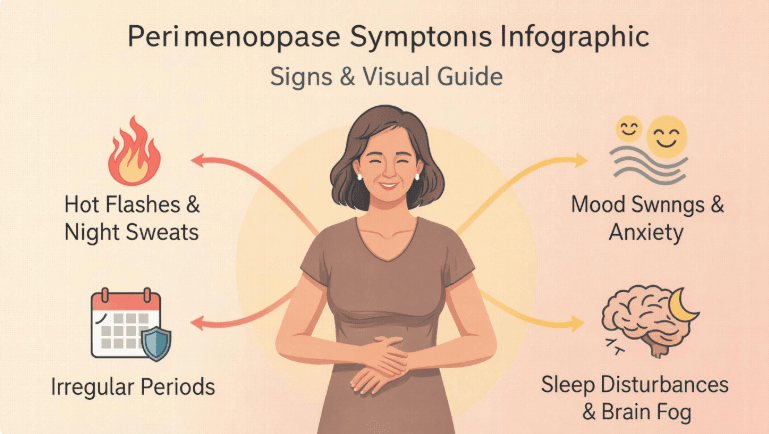
A perimenopause symptoms infographic makes complex information easier to understand at a glance.
Visual guides help by:
- Grouping symptoms by body system
- Highlighting symptom clusters
- Showing common progression patterns
- Improving symptom awareness
This can be especially helpful during doctor visits or symptom tracking.
Perimenopause Symptoms by Category
Symptoms often fall into recognizable groups.
Menstrual Symptoms
Cycle changes are often the earliest warning signs.
Common menstrual symptoms include:
- Irregular periods
- Missed cycles
- Heavy bleeding
- Spotting
- Shorter cycles
- Longer cycles
Many women first notice these changes before other symptoms appear.
Vasomotor Symptoms
These involve temperature regulation.
Common symptoms include:
- Hot flashes
- Night sweats
- Sudden sweating
- Facial flushing
- Chills
Vasomotor symptoms are among the most recognizable menopause-related signs.
Sleep Symptoms
Sleep disruption can significantly affect quality of life.
Common issues include:
- Insomnia
- Frequent waking
- Restless sleep
- Early waking
- Poor sleep quality
Poor sleep often worsens other symptoms. You may read this: Symptoms of Ovulation During Perimenopause Explained.
Emotional Symptoms
Hormonal fluctuations affect neurotransmitters.
This may lead to:
- Mood swings
- Irritability
- Anxiety
- Depression
- Emotional sensitivity
Emotional symptoms are often underestimated.
Cognitive Symptoms
Brain-related symptoms frequently surprise women.
Common cognitive changes include:
- Brain fog
- Forgetfulness
- Reduced focus
- Word-finding difficulty
- Mental fatigue
Many women describe feeling mentally slower.
Physical Symptoms
Hormonal shifts influence the entire body.
Common physical symptoms include:
- Fatigue
- Weight gain
- Joint pain
- Headaches
- Muscle aches
- Heart palpitations
These symptoms may come and go unpredictably.
Sexual Health Symptoms
Hormones strongly influence intimacy and comfort.
Symptoms may include:
- Low libido
- Vaginal dryness
- Pain during sex
- Reduced arousal
These symptoms can affect relationships and confidence.
What a Good Perimenopause Symptoms Infographic Should Include
Not all infographics provide useful information.
A high-quality perimenopause symptoms infographic should clearly show:
Symptom Categories
Organized sections improve readability.
Severity Indicators
Visual scales help identify impact.
Timeline
Symptom progression helps set expectations.
Medical Warning Signs
Important red flags should stand out.
Good design improves health literacy.
Symptom Clusters to Watch
Symptoms rarely occur alone.
Certain combinations strongly suggest hormonal transition.
Cluster 1: Cycle Changes + Hot Flashes
Common during mid-perimenopause.
Cluster 2: Insomnia + Anxiety
Often linked to fluctuating hormones.
Cluster 3: Brain Fog + Fatigue
Frequently reported during later stages.
Recognizing clusters is often more useful than tracking isolated symptoms.
When Symptoms Need Medical Attention
Not every symptom should be attributed to hormones.
Seek medical evaluation if you experience:
- Extremely heavy bleeding
- Chest pain
- Severe depression
- Fainting
- Persistent palpitations
- Major weight loss
These may indicate other health issues.
How to Use an Infographic for Symptom Tracking
A perimenopause symptoms infographic becomes more powerful when used as a tracking tool.
You can:
- Mark symptoms weekly
- Rate severity
- Track cycle timing
- Monitor sleep changes
- Record mood patterns
Tracking reveals useful trends over time.
Managing Perimenopause Symptoms
Symptoms often improve with targeted support.
Helpful approaches include:
Lifestyle Support
- Better sleep habits
- Regular exercise
- Balanced nutrition
- Reduced alcohol
Stress Management
Stress worsens hormonal symptoms.
Try:
- Meditation
- Yoga
- Breathwork
- Therapy
Medical Treatment
Treatment options may include:
- Hormone therapy
- Vaginal estrogen
- Sleep support
- Mental health care
FAQ
What is a perimenopause symptoms infographic?
It is a visual guide that organizes common symptoms into easy-to-understand categories.
Can an infographic diagnose perimenopause?
No. It supports awareness but does not replace medical evaluation.
What are the earliest symptoms?
Irregular periods, sleep issues, and mood changes are common early signs.
How long does perimenopause last?
It typically lasts several years, though timelines vary.
Are symptoms the same for everyone?
No. Symptoms vary widely in type and severity.
Why are visual guides helpful?
They simplify complex symptom patterns and improve recognition.
Can symptoms come and go?
Yes. Hormonal fluctuations make symptoms unpredictable.
When should I see a doctor?
See a doctor when symptoms significantly affect daily life or include warning signs.
Conclusion
Hormonal transitions can feel overwhelming when symptoms appear scattered and unpredictable. A well-designed perimenopause symptoms infographic can transform confusion into clarity by showing how seemingly unrelated symptoms connect.
The more clearly you understand symptom patterns, the easier it becomes to seek support, make informed decisions, and navigate perimenopause with greater confidence and less uncertainty.