
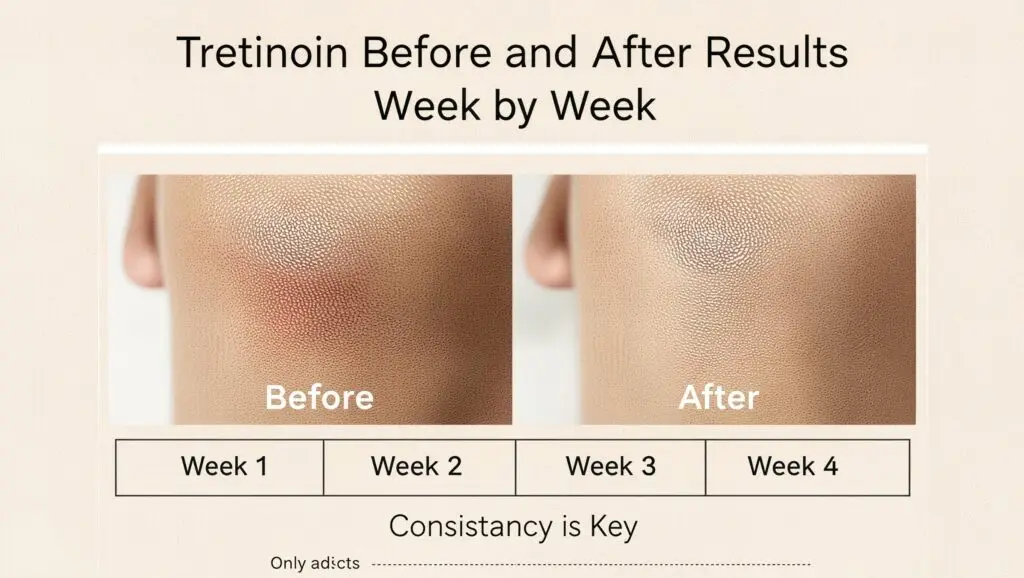

Few skincare products have earned the reputation that tretinoin has. From clearing stubborn acne to softening wrinkles and fading dark spots, the dramatic tretinoin before and after transformations shared online have made this prescription retinoid one of the most talked-about skincare treatments in the world.
But while the glowing after photos get most of the attention, the journey itself is rarely simple. Many people experience dryness, peeling, redness, sensitivity, and even temporary breakouts before they begin seeing clearer, smoother skin. That confusing adjustment phase often causes people to quit too early.
Understanding what actually happens during the tretinoin process can help set realistic expectations and prevent unnecessary frustration. Skin renewal takes time, consistency, and patience, especially with a powerful ingredient like tretinoin.
This guide explains how tretinoin works, what changes to expect week by week, common side effects, and how to achieve the best possible long-term results safely.
What Is Tretinoin?
Understanding Tretinoin
Tretinoin is a prescription-strength retinoid derived from vitamin A. Dermatologists commonly prescribe it for:
- Acne treatment
- Fine lines and wrinkles
- Hyperpigmentation
- Uneven skin texture
- Sun damage
- Enlarged pores
Unlike cosmetic retinol products, tretinoin works more aggressively and directly at the cellular level.
How Tretinoin Works
Tretinoin speeds up skin cell turnover. This process helps remove dead skin cells faster while encouraging new, healthier skin to emerge.
Benefits may include:
- Clearer pores
- Reduced acne
- Smoother texture
- Improved collagen production
- Brighter complexion
However, accelerated skin renewal also explains why irritation commonly occurs during the early stages.
Tretinoin Before and After: What to Expect
Results Rarely Happen Overnight
One of the biggest misconceptions about tretinoin is expecting instant results. Most users experience a gradual transformation rather than dramatic overnight improvement.
The timeline varies depending on:
- Skin type
- Tretinoin strength
- Frequency of use
- Existing skin concerns
- Overall skincare routine
The Adjustment Phase Is Normal
The first few weeks can actually make the skin appear worse before it improves.
Common early experiences include:
- Dryness
- Flaking
- Redness
- Purging breakouts
- Tightness
- Sensitivity
These reactions are often temporary signs that the skin is adjusting.
Week-by-Week Tretinoin Timeline
Weeks 1–2
During the first two weeks, many users notice irritation before visible improvement.
Common symptoms include:
- Dry patches
- Mild peeling
- Increased sensitivity
- Temporary redness
Some people experience no irritation at all, while others feel significant dryness.
Weeks 3–6
This period is often called the “purge phase.”
Tretinoin accelerates cell turnover, bringing clogged pores to the surface faster than normal.
Possible experiences include:
- Increased acne breakouts
- Whiteheads
- Blackheads surfacing
- Peeling around the mouth and nose
This stage can feel discouraging, but it is usually temporary.

Weeks 6–12
Many users begin noticing clearer skin and smoother texture during this stage.
Improvements may include:
- Fewer breakouts
- Reduced inflammation
- Softer skin
- More even tone
Fine lines and pigmentation changes often require more time.
Three to Six Months
Long-term benefits become more noticeable with consistent use.
Common improvements include:
- Reduced acne scars
- Smaller-looking pores
- Brighter complexion
- Fewer wrinkles
- Improved elasticity
Collagen production increases gradually over time.
Understanding the Tretinoin Purge
Why Purging Happens
Purging occurs because tretinoin speeds up the life cycle of clogged pores already forming beneath the skin.
Rather than causing entirely new acne, it often accelerates existing congestion.
How Long Does Purging Last?
For most people, purging lasts between 2 and 8 weeks.
However, severe or persistent breakouts should be evaluated by a dermatologist to rule out irritation or incompatible products. The most relevent topic: Midi Health Reviews: Honest Insights and Patient Experiences.
Tretinoin Before and After for Acne
One of the Most Effective Acne Treatments
Tretinoin is widely considered one of the gold-standard acne treatments because it addresses several root causes of acne.
It helps:
- Unclog pores
- Reduce inflammation
- Prevent future breakouts
- Improve post-acne marks
Acne Scar Improvement
Tretinoin may gradually fade post-inflammatory hyperpigmentation and support smoother skin texture over time.
Deep acne scars may still require additional treatments such as:
- Microneedling
- Laser therapy
- Chemical peels
Tretinoin Before and After for Anti-Aging
Collagen Production and Wrinkles
Tretinoin is one of the few topical skincare ingredients backed by decades of research for wrinkle reduction.
It may help improve:
- Fine lines
- Sun damage
- Skin texture
- Elasticity
Long-Term Skin Benefits
Many users continue tretinoin for years because benefits often increase with long-term consistency.
Results may include:
- Firmer-looking skin
- More even pigmentation
- Smoother texture
- Reduced roughness
Common Side Effects of Tretinoin
Dryness and Peeling
Dryness is one of the most common side effects, especially during early use.
Redness and Irritation
Some users experience temporary irritation as the skin barrier adjusts.
Increased Sun Sensitivity
Tretinoin makes the skin more sensitive to UV exposure.
Daily sunscreen use becomes essential during treatment.
Temporary Breakouts
Purging is common but usually temporary.
Persistent irritation or severe breakouts should be discussed with a healthcare professional.
How to Reduce Tretinoin Irritation
Start Slowly
Many dermatologists recommend starting with:
- Two to three nights weekly
- A low-strength formula
- Small amounts
Gradual introduction helps reduce irritation.
Use a Gentle Moisturizer
Hydration helps protect the skin barrier during adjustment.
Look for moisturizers with:
- Ceramides
- Hyaluronic acid
- Glycerin
Avoid Harsh Products
Combining tretinoin with strong exfoliants may worsen irritation.
Temporarily avoid:
- Scrubs
- Strong acids
- Alcohol-heavy toners
- Over-exfoliation
The Sandwich Method
What Is the Sandwich Method?
The sandwich method involves:
- Applying moisturizer
- Applying tretinoin
- Applying another layer of moisturizer
This technique helps reduce irritation without significantly affecting effectiveness.
Who Benefits Most?
The sandwich method is especially helpful for:
- Sensitive skin
- Beginners
- Dry skin types
Sunscreen Is Non-Negotiable
Why SPF Matters
Tretinoin increases photosensitivity, making the skin more vulnerable to sun damage.
Without sunscreen, irritation and pigmentation may worsen.
Best Sunscreen Practices
Choose:
- Broad-spectrum SPF 30 or higher
- Non-comedogenic formulas
- Daily application
Consistent sun protection also helps preserve results.
Ingredients That Work Well With Tretinoin
Niacinamide
Niacinamide may help reduce irritation and improve the skin barrier.
Hyaluronic Acid
Hyaluronic acid supports hydration without heaviness.
Ceramides
Ceramides help strengthen and repair the skin barrier.
These supportive ingredients often improve comfort during tretinoin use.
Ingredients to Avoid With Tretinoin
Harsh Exfoliants
Overusing exfoliants may damage the skin barrier.
Benzoyl Peroxide
Some formulations may reduce tretinoin stability if applied together.
Strong Acids
Using multiple active ingredients simultaneously can increase irritation risk.
Balancing actives carefully is important.
Tretinoin Before and After for Hyperpigmentation
Fading Dark Spots
Tretinoin helps accelerate skin renewal, which may gradually lighten:
- Acne marks
- Sun spots
- Uneven pigmentation
Patience Is Essential
Pigmentation often improves more slowly than acne.
Visible fading may require several months of consistent use.
How Long Should You Use Tretinoin?
Consistency Matters
Tretinoin works best as a long-term treatment rather than a quick fix.
Many users continue indefinitely for maintenance and anti-aging support.
Stopping Tretinoin
If discontinued, acne and aging concerns may gradually return over time.
Long-term maintenance often provides the best results.
Tretinoin and Skin Types
Oily Skin
Oily skin often tolerates tretinoin better due to naturally higher sebum production.
Dry or Sensitive Skin
Sensitive skin may require:
- Lower strengths
- Less frequent use
- Barrier-supportive skincare
Combination Skin
Application adjustments may help reduce irritation in drier areas.
Mistakes That Slow Results
Using Too Much Product
More tretinoin does not equal faster results.
A pea-sized amount is usually enough for the entire face.
Applying on Wet Skin
Wet skin increases absorption and irritation risk.
Allow skin to dry completely before applying tretinoin.
Skipping Moisturizer
Hydration helps maintain the skin barrier and improve tolerance.
Emotional Expectations During the Process
The Mental Side of Skin Changes
The purge stage can feel emotionally exhausting, especially when skin temporarily worsens.
Many users quit too early because they mistake adjustment symptoms for failure.
Tracking Progress Helps
Monthly photos often reveal gradual improvements that are hard to notice daily.
Patience is one of the biggest keys to successful tretinoin use.
FAQs
How long does tretinoin take to work?
Most users notice visible improvements within 6–12 weeks, while deeper changes may take several months.
Why does my skin look worse before better?
Tretinoin speeds up cell turnover, which can temporarily bring clogged pores and irritation to the surface.
Is purging normal with tretinoin?
Yes. Temporary breakouts are common during the adjustment phase.
Can tretinoin remove wrinkles?
Tretinoin may reduce the appearance of fine lines and improve collagen production over time.
Should I use tretinoin every night?
Not necessarily. Beginners often start two or three times weekly before increasing frequency gradually.
Can tretinoin help acne scars?
It may improve pigmentation and texture, though deeper scars may require additional treatments.
Why is sunscreen important with tretinoin?
Tretinoin increases sun sensitivity, making sunscreen essential to prevent irritation and pigmentation.
Can I use moisturizer with tretinoin?
Yes. Moisturizer helps protect the skin barrier and reduce irritation.
Does tretinoin thin the skin?
Tretinoin may temporarily thin the outermost layer while strengthening deeper collagen layers over time.
Is tretinoin better than retinol?
Tretinoin is generally stronger and works faster because it does not require conversion within the skin.
Conclusion
The dramatic tretinoin before and after transformations seen online are usually the result of patience, consistency, and proper skincare support rather than instant miracles. While the adjustment period can feel frustrating, many users eventually experience clearer, smoother, brighter, and healthier-looking skin with long-term use.
Understanding the purge phase, protecting the skin barrier, using sunscreen consistently, and introducing tretinoin gradually can make the process far more manageable. Whether the goal is acne treatment, anti-aging support, or fading dark spots, tretinoin remains one of the most researched and effective topical skincare treatments available.
For many people, the temporary discomfort is ultimately worth the long-term skin improvements that develop over time.