
At 44, many women begin noticing subtle changes that are difficult to explain. Maybe your once-predictable cycle is suddenly irregular. Perhaps you’re waking up at 3 a.m., feeling anxious for no reason, or struggling with fatigue that coffee no longer fixes. If this sounds familiar, you may be experiencing symptoms of perimenopause at 44.
For many women, age 44 falls squarely within the early-to-mid perimenopause transition. Because symptoms often develop gradually, they are frequently mistaken for stress, burnout, thyroid issues, or simply getting older.
Understanding what’s normal—and what deserves medical attention—can help you feel more confident and less overwhelmed during this hormonal transition.
What Is Perimenopause?
Perimenopause is the stage leading up to menopause when the ovaries gradually become less consistent in hormone production. Estrogen and progesterone begin fluctuating rather than following stable monthly patterns.
These hormonal changes affect many systems, including:
- Reproductive health
- Brain chemistry
- Sleep cycles
- Temperature regulation
- Metabolism
- Emotional health
Perimenopause can last several years before menopause officially begins.
Why Age 44 Is a Common Time for Perimenopause Symptoms
While every woman’s timeline differs, age 44 is a common age for symptoms to become more noticeable.
This happens because:
- Ovarian reserve declines
- Ovulation becomes less consistent
- Hormone fluctuations become stronger
- Stress resilience may decrease
These changes contribute directly to symptoms of perimenopause at 44, even if periods still occur regularly.
Common Symptoms of Perimenopause at 44
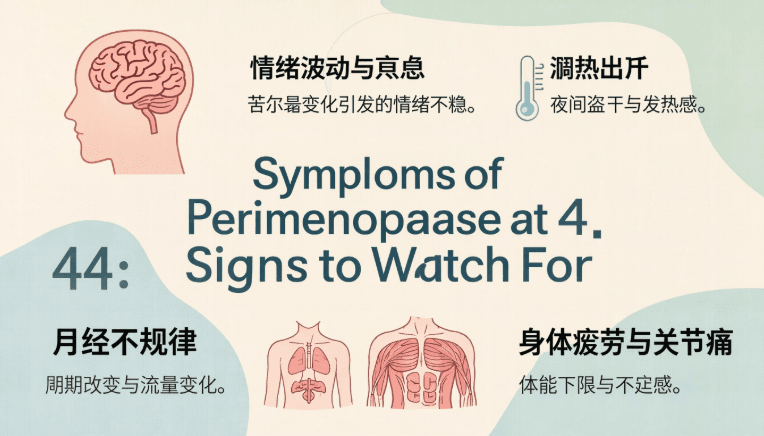
Irregular Periods
Cycle changes are often the earliest sign.
You may notice:
- Shorter cycles
- Longer cycles
- Missed periods
- Heavier bleeding
- Lighter bleeding
Even mild irregularity can indicate hormonal changes. You may read this: What Are the 34 Symptoms of Perimenopause Explained.
Hot Flashes
Hot flashes may begin during early or mid-perimenopause.
Common sensations include:
- Sudden heat
- Facial flushing
- Sweating
- Chills afterward
Some women experience mild episodes while others experience severe ones.
Night Sweats
Night sweats can significantly disrupt sleep.
This may lead to:
- Frequent waking
- Damp sheets
- Difficulty falling back asleep
Sleep Problems
Sleep disruption becomes increasingly common.
Symptoms include:
- Insomnia
- Restless sleep
- Early waking
- Light sleep
Poor sleep often intensifies other symptoms.
Mood Swings
Hormones strongly affect emotional regulation.
You may experience:
- Irritability
- Emotional sensitivity
- Sudden frustration
- Low patience
Cognitive Symptoms at 44
Brain-related symptoms can feel surprising.
Brain Fog
One of the most common complaints.
Symptoms include:
- Forgetfulness
- Word-finding difficulty
- Reduced focus
- Mental fatigue
Many women worry these changes signal something serious.
Difficulty Concentrating
Tasks that once felt easy may suddenly feel harder.
Multitasking may become more difficult.
Physical Symptoms of Perimenopause at 44
Fatigue
Persistent fatigue is extremely common.
This may feel like:
- Low energy
- Heavy exhaustion
- Reduced motivation
Weight Gain
Hormonal shifts may contribute to:
- Belly fat
- Slower metabolism
- Increased weight retention
Joint Pain
Some women experience:
- Aching joints
- Stiffness
- Muscle soreness
Headaches
Hormonal changes may trigger headaches or migraines.
Emotional and Mental Health Symptoms
The emotional impact of perimenopause can be significant.
Anxiety
Unexpected anxiety may appear.
Common signs include:
- Racing thoughts
- Restlessness
- Nervous energy
Depression
Some women experience:
- Sadness
- Low motivation
- Emotional numbness
Medical support matters if symptoms become severe.
Less Common Symptoms
Not all symptoms are widely discussed.
Less common but possible symptoms include:
- Heart palpitations
- Itchy skin
- Dizziness
- Tingling sensations
- Breast tenderness
- Digestive changes
These may still be hormone-related.
When Symptoms Need Medical Attention
Seek medical care if you experience:
- Extremely heavy bleeding
- Chest pain
- Severe depression
- Persistent palpitations
- Major fatigue
Not every symptom should automatically be blamed on hormones.
Managing Symptoms of Perimenopause at 44
Relief is possible with lifestyle support and medical care.
Improve Sleep
Helpful strategies:
- Cool room
- Consistent bedtime
- Less caffeine
Exercise Regularly
Exercise supports:
- Mood
- Sleep
- Metabolism
Good options include:
- Walking
- Strength training
- Yoga
Reduce Stress
Stress worsens symptoms.
Helpful tools:
- Meditation
- Breathwork
- Therapy
- Journaling
Consider Medical Support
Treatment options may include:
- Hormone therapy
- Symptom management
- Nutritional support
FAQ
Is 44 a normal age for perimenopause?
Yes. Many women begin experiencing noticeable symptoms in their early to mid-40s.
Can I still get pregnant at 44 during perimenopause?
Yes. Pregnancy remains possible until menopause is complete.
Are irregular periods always the first symptom?
Not always. Sleep issues or mood changes may appear first.
Can anxiety start during perimenopause?
Yes. Hormonal shifts can affect mental health significantly.
How long does perimenopause last?
It often lasts several years.
Can symptoms come and go?
Yes. Hormonal fluctuations make symptoms unpredictable.
Should I get hormone testing?
Testing can help but isn’t always necessary for diagnosis.
Can symptoms improve?
Yes. Many women improve with treatment and lifestyle changes.
Conclusion
Experiencing symptoms of perimenopause at 44 can feel confusing because symptoms often appear gradually and unpredictably. What feels like random physical or emotional changes may actually be part of a normal hormonal transition.
Recognizing these symptoms early allows you to seek support, make informed health decisions, and navigate this stage with more clarity and confidence.