
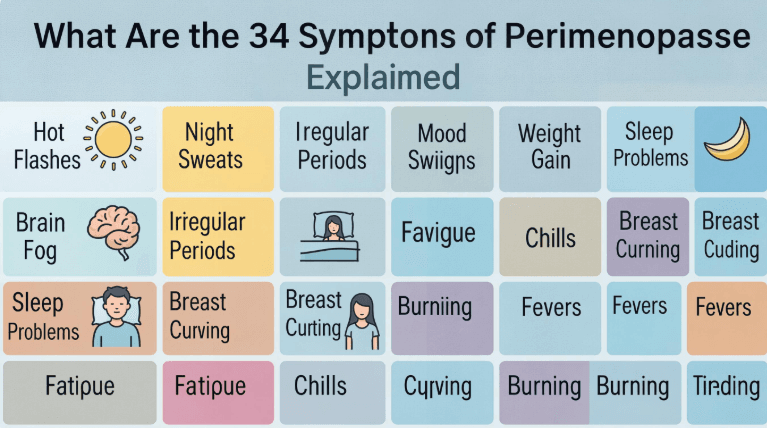

When your body starts feeling “different” in ways you can’t easily explain, it’s natural to start searching for answers. One of the most common questions women ask is what are the 34 symptoms of perimenopause, especially when multiple changes seem to be happening at once.
Perimenopause doesn’t arrive with a clear announcement. Instead, it shows up gradually—through shifts in mood, energy, sleep, cycles, and even cognition. Because these symptoms affect so many systems in the body, they can feel confusing or unrelated at first.
Understanding the full range of symptoms can help you recognize patterns earlier, reduce anxiety about what’s happening, and feel more in control of your health journey.
What Is Perimenopause?
Perimenopause is the transitional phase before menopause when hormone levels—especially estrogen and progesterone—begin to fluctuate unpredictably.
This stage can last several years and affects nearly every part of the body.
Hormonal changes influence:
- Reproductive system
- Brain function
- Sleep cycles
- Emotional regulation
- Metabolism
- Skin and joints
Understanding What Are the 34 Symptoms of Perimenopause
When people ask what are the 34 symptoms of perimenopause, they are usually trying to understand why their body feels unpredictable.
These symptoms don’t happen all at once. They often appear gradually and vary in intensity from woman to woman.
Below is a comprehensive breakdown of the most commonly reported symptoms.
The 34 Symptoms of Perimenopause
Menstrual and Reproductive Symptoms (1–8)
- Irregular periods
- Heavier menstrual bleeding
- Lighter periods
- Missed periods
- Spotting between cycles
- Shorter cycles
- Longer cycles
- Painful periods
Vasomotor Symptoms (9–14)
- Hot flashes
- Night sweats
- Sudden sweating
- Facial flushing
- Cold chills after sweating
- Temperature sensitivity
Sleep-Related Symptoms (15–18)
- Insomnia
- Frequent waking
- Restless sleep
- Early morning waking
Emotional and Mood Symptoms (19–24)
- Mood swings
- Irritability
- Anxiety
- Depression
- Emotional sensitivity
- Sudden anger
Cognitive Symptoms (25–28)
- Brain fog
- Forgetfulness
- Difficulty concentrating
- Mental fatigue
Physical Energy and Body Symptoms (29–34)
- Fatigue
- Weight gain
- Bloating
- Joint pain
- Headaches or migraines
- Heart palpitations
Why These 34 Symptoms Happen
When exploring what are the 34 symptoms of perimenopause, it’s important to understand the root cause.
Hormones act as chemical messengers throughout the body. When estrogen and progesterone fluctuate, they affect:
- Brain neurotransmitters
- Body temperature regulation
- Sleep hormones
- Metabolism
- Inflammation levels
This explains why symptoms can feel widespread and unrelated. You may aslo read this: Testosterone Cream for Women: Benefits, Uses & Safety Guide.
Early vs Late Perimenopause Symptoms
Symptoms may evolve over time.
Early Stage
- Irregular periods
- Mild mood changes
- Slight sleep disruption
Mid Stage
- Hot flashes
- Brain fog
- Anxiety increases
Late Stage
- More missed periods
- Stronger vasomotor symptoms
- Greater fatigue
Emotional Impact of Perimenopause Symptoms
Many women report emotional changes as the most difficult part.
This includes:
- Feeling overwhelmed
- Loss of patience
- Increased stress sensitivity
- Mood instability
Understanding what are the 34 symptoms of perimenopause helps normalize these experiences.
When Symptoms Become Disruptive
Symptoms should not be ignored when they affect daily life.
Seek support if you experience:
- Severe sleep loss
- Persistent anxiety
- Heavy bleeding
- Extreme fatigue
- Emotional distress
How to Manage Perimenopause Symptoms
Although symptoms vary, many strategies can help.
Improve Sleep
- Maintain consistent bedtime
- Reduce caffeine
- Keep room cool
Balance Hormones Naturally
- Regular exercise
- Nutrient-rich diet
- Hydration
Manage Stress
- Deep breathing
- Yoga
- Mindfulness
- Therapy
Medical Support Options
- Hormone therapy
- Sleep aids
- Anxiety treatment
- Nutritional support
Why Symptoms Vary So Much
Not every woman experiences all 34 symptoms.
Differences depend on:
- Genetics
- Lifestyle
- Stress levels
- Overall health
- Hormone sensitivity
This variability is normal.
FAQ
What are the 34 symptoms of perimenopause?
They include physical, emotional, cognitive, and reproductive changes caused by hormone fluctuations.
Do all women experience all 34 symptoms?
No. Symptoms vary widely from person to person.
What is the most common symptom?
Irregular periods and mood swings are often the earliest signs.
Can symptoms come and go?
Yes. Hormones fluctuate, so symptoms often appear inconsistently.
How long do symptoms last?
Perimenopause can last several years before menopause.
Can perimenopause cause anxiety?
Yes. Hormonal changes can significantly affect mood and stress levels.
When should I see a doctor?
If symptoms affect your daily life or feel severe.
Can symptoms improve?
Yes. Lifestyle changes and treatment can help significantly.
Conclusion
Understanding what are the 34 symptoms of perimenopause can make a confusing stage of life feel more predictable and manageable. While symptoms may feel overwhelming at times, they are part of a natural hormonal transition many women experience.
With awareness, support, and the right care, this stage can become not just manageable—but a time of deeper understanding of your body and wellbeing.