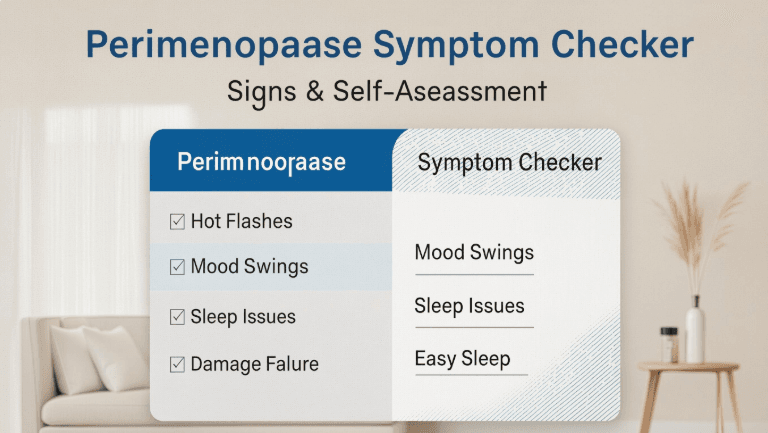

Have your periods become unpredictable? Are you suddenly dealing with hot flashes, poor sleep, mood swings, or brain fog—and wondering whether hormones might be the reason? If so, a perimenopause symptom checker can help you connect the dots.
Many women spend years feeling “off” without realizing they’ve entered perimenopause. Because symptoms often appear gradually and affect multiple body systems, they can easily be mistaken for stress, burnout, thyroid issues, or simply aging.
Understanding the signs early can make a major difference. The more aware you are of symptom patterns, the easier it becomes to seek the right support and manage this transition with confidence.
What Is Perimenopause?
Perimenopause is the transitional phase before menopause, when the ovaries gradually produce less estrogen and progesterone.
Unlike menopause—which is confirmed after 12 months without a period—perimenopause can last several years.
During this stage, hormone fluctuations can affect:
- Menstrual cycles
- Mood
- Sleep
- Energy
- Libido
- Body temperature
These changes may feel subtle at first, then become more noticeable over time.
Why Use a Perimenopause Symptom Checker?
A perimenopause symptom checker isn’t a diagnosis tool, but it can help you identify patterns and recognize whether your symptoms align with hormonal transition.
It may help you:
- Track symptom frequency
- Notice hormonal patterns
- Prepare for doctor visits
- Understand symptom severity
The goal isn’t self-diagnosis—it’s awareness.
Perimenopause Symptom Checker: Common Symptoms
Review the symptoms below and note how many apply to you.
Menstrual Changes
Check symptoms such as:
- Irregular periods
- Heavier bleeding
- Lighter bleeding
- Spotting between cycles
- Missed periods
- Shorter cycles
- Longer cycles
These are often among the earliest hormonal signs. You may read this: Perimenopause Symptoms Infographic: Signs & Visual Guide.
Vasomotor Symptoms
These symptoms involve body temperature regulation.
Common examples include:
- Hot flashes
- Night sweats
- Sudden sweating
- Chills after sweating
- Facial flushing
Sleep Symptoms
Sleep disturbances are extremely common.
Check if you experience:
- Trouble falling asleep
- Frequent waking
- Restless sleep
- Early waking
- Non-restorative sleep
Mood and Emotional Changes
Hormones strongly affect brain chemistry.
Symptoms may include:
- Mood swings
- Irritability
- Anxiety
- Low motivation
- Emotional sensitivity
- Depression
Cognitive Symptoms
Brain-related symptoms often surprise women.
Check for:
- Brain fog
- Forgetfulness
- Poor concentration
- Word-finding issues
- Mental fatigue
Physical Symptoms
Hormonal changes affect the whole body.
Common symptoms include:
- Fatigue
- Weight gain
- Joint pain
- Headaches
- Heart palpitations
- Muscle aches
Sexual Health Symptoms
Hormones also influence sexual wellness.
Check for:
- Low libido
- Vaginal dryness
- Pain during sex
- Reduced arousal
How to Score Your Perimenopause Symptom Checker
Use a simple scoring method.
Mild Symptoms (1 Point Each)
Symptoms that occur occasionally.
Moderate Symptoms (2 Points Each)
Symptoms occurring weekly.
Severe Symptoms (3 Points Each)
Symptoms affecting daily life.
After scoring:
- 0–10 → Mild symptom burden
- 11–25 → Moderate symptom burden
- 26+ → Significant symptom burden
Higher scores suggest symptoms may be meaningfully affecting quality of life.
When Symptoms Suggest Perimenopause
A perimenopause symptom checker becomes more useful when symptoms appear in clusters.
Common patterns include:
Pattern 1: Cycle Changes + Hot Flashes
Strong indicator of hormonal transition.
Pattern 2: Poor Sleep + Mood Changes
Hormonal shifts often disrupt sleep and emotional regulation.
Pattern 3: Brain Fog + Fatigue
Cognitive symptoms frequently appear alongside energy loss.
Clusters matter more than isolated symptoms.
When Symptoms May Be Something Else
Not every symptom is caused by perimenopause.
Other conditions may cause similar issues.
These include:
- Thyroid disorders
- Iron deficiency
- Chronic stress
- Anxiety disorders
- Depression
- Sleep apnea
Medical evaluation helps rule out other causes.
When to See a Doctor
Seek medical care if symptoms cause:
- Severe sleep disruption
- Heavy bleeding
- Persistent depression
- Extreme fatigue
- Major life disruption
Professional evaluation may include:
- Medical history review
- Blood work
- Symptom tracking
- Hormonal assessment
How to Track Symptoms Effectively
A symptom checker works best with ongoing tracking.
Record:
- Symptom severity
- Frequency
- Cycle timing
- Sleep quality
- Mood changes
Tracking over several months reveals useful patterns.
Managing Perimenopause Symptoms
Symptoms can often improve with lifestyle changes or treatment.
Helpful strategies include:
Better Sleep Hygiene
- Cool room
- Consistent schedule
- Reduced caffeine
Exercise
Movement supports hormone balance.
Best options:
- Walking
- Strength training
- Yoga
Stress Management
Stress worsens hormonal symptoms.
Try:
- Meditation
- Breathwork
- Therapy
- Journaling
Medical Treatment
Treatment options may include:
- Hormone therapy
- Vaginal estrogen
- Sleep support
- Mental health care
FAQ
Can a symptom checker diagnose perimenopause?
No. It helps identify patterns but does not replace medical evaluation.
At what age does perimenopause start?
Most women begin in their 40s, though earlier onset is possible.
Are irregular periods always perimenopause?
No. Other medical causes can also affect cycles.
How many symptoms indicate perimenopause?
There is no fixed number. Symptom clusters matter most.
Should I track symptoms daily?
Daily or weekly tracking improves accuracy.
Can blood tests confirm perimenopause?
Hormone testing can help, but fluctuating hormones make diagnosis complex.
Is brain fog common?
Yes. Cognitive symptoms are very common during perimenopause.
When should I seek treatment?
Seek help when symptoms affect quality of life or daily functioning.
Conclusion
Navigating hormonal changes can feel confusing, especially when symptoms appear gradually or seem unrelated. Using a perimenopause symptom checker can provide valuable clarity by helping you recognize patterns and understand what your body may be telling you.
The most important step is paying attention. When symptoms are tracked, understood, and discussed with a healthcare provider, this transition often becomes far more manageable—and much less overwhelming.